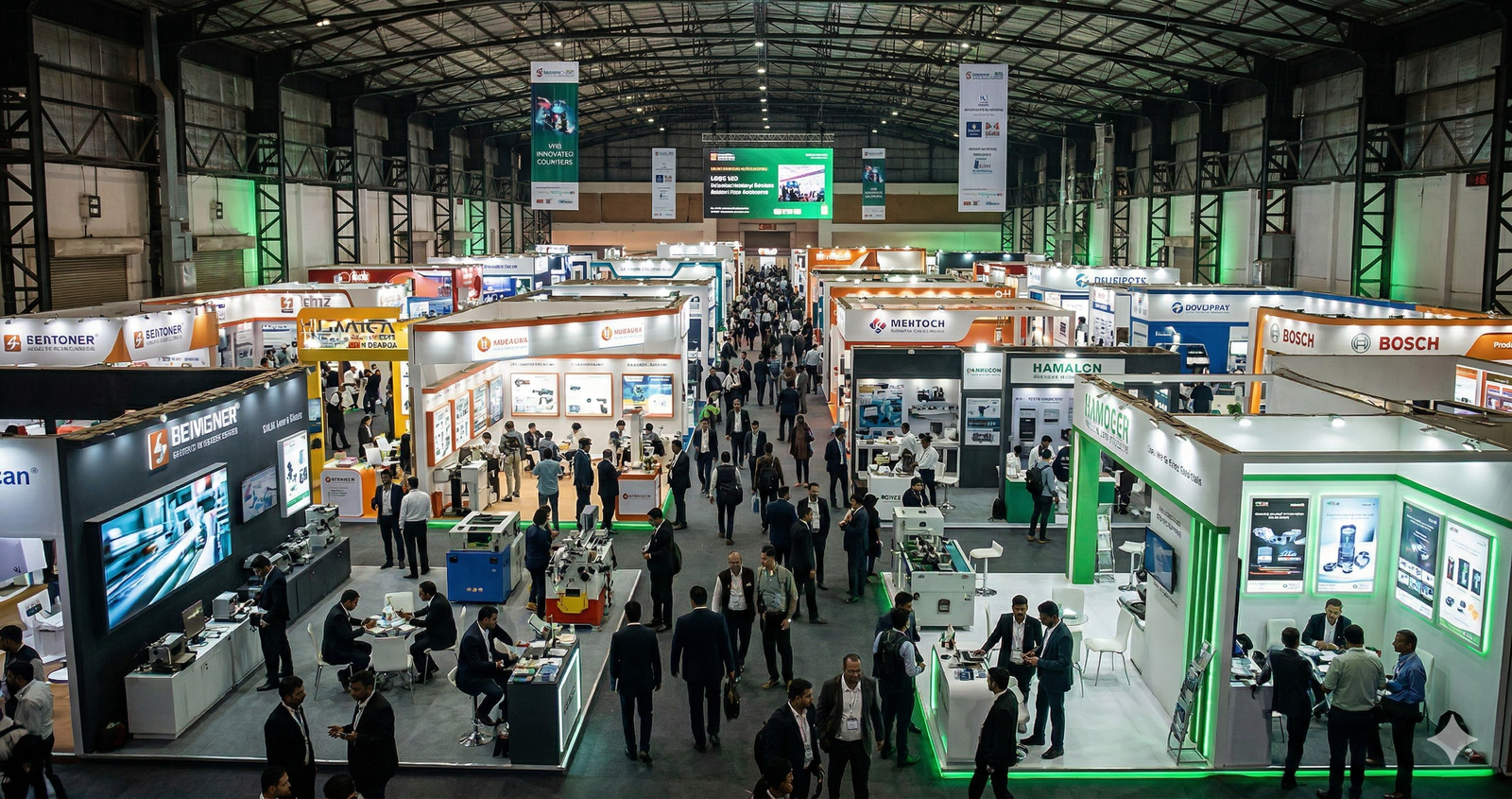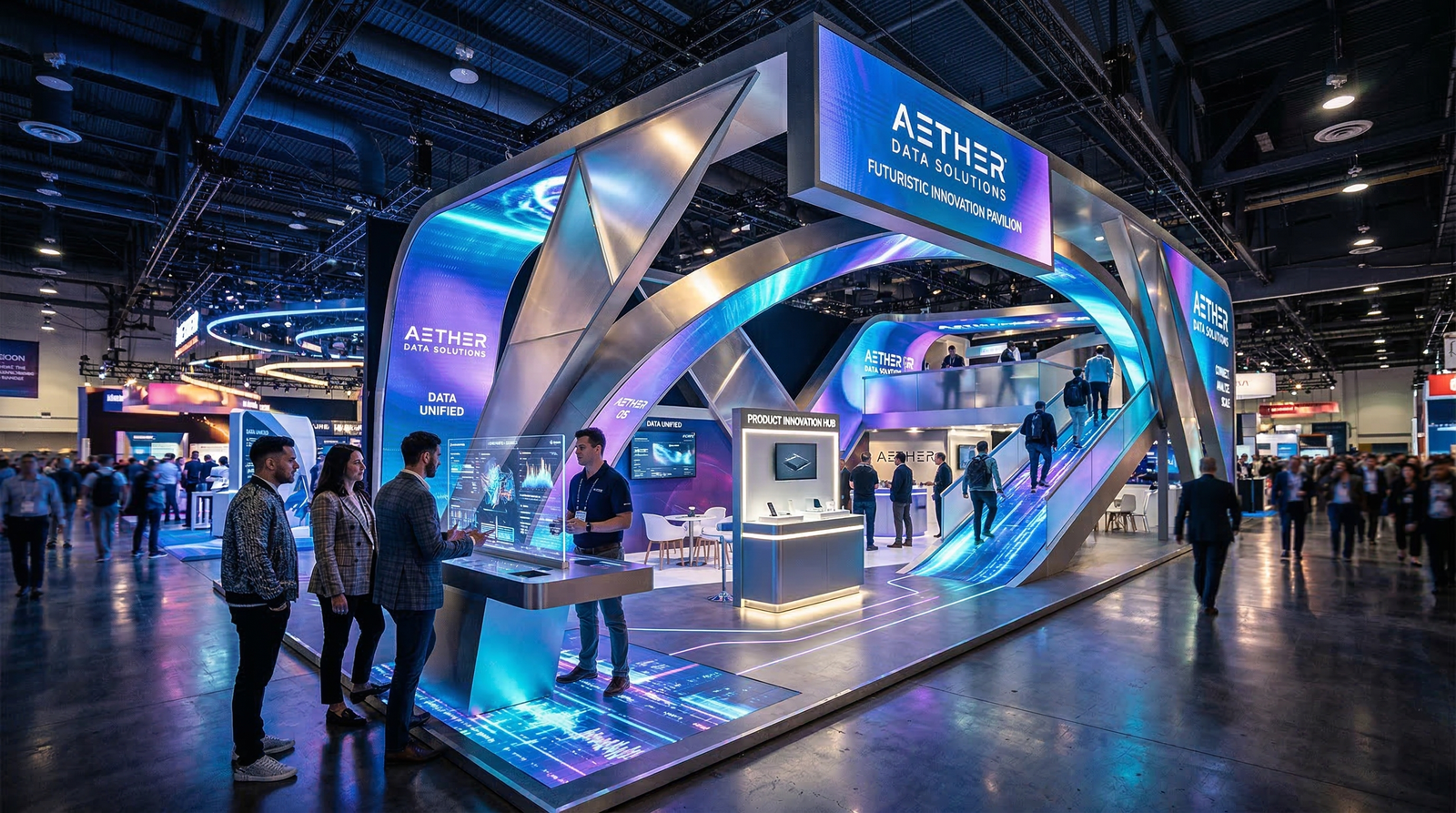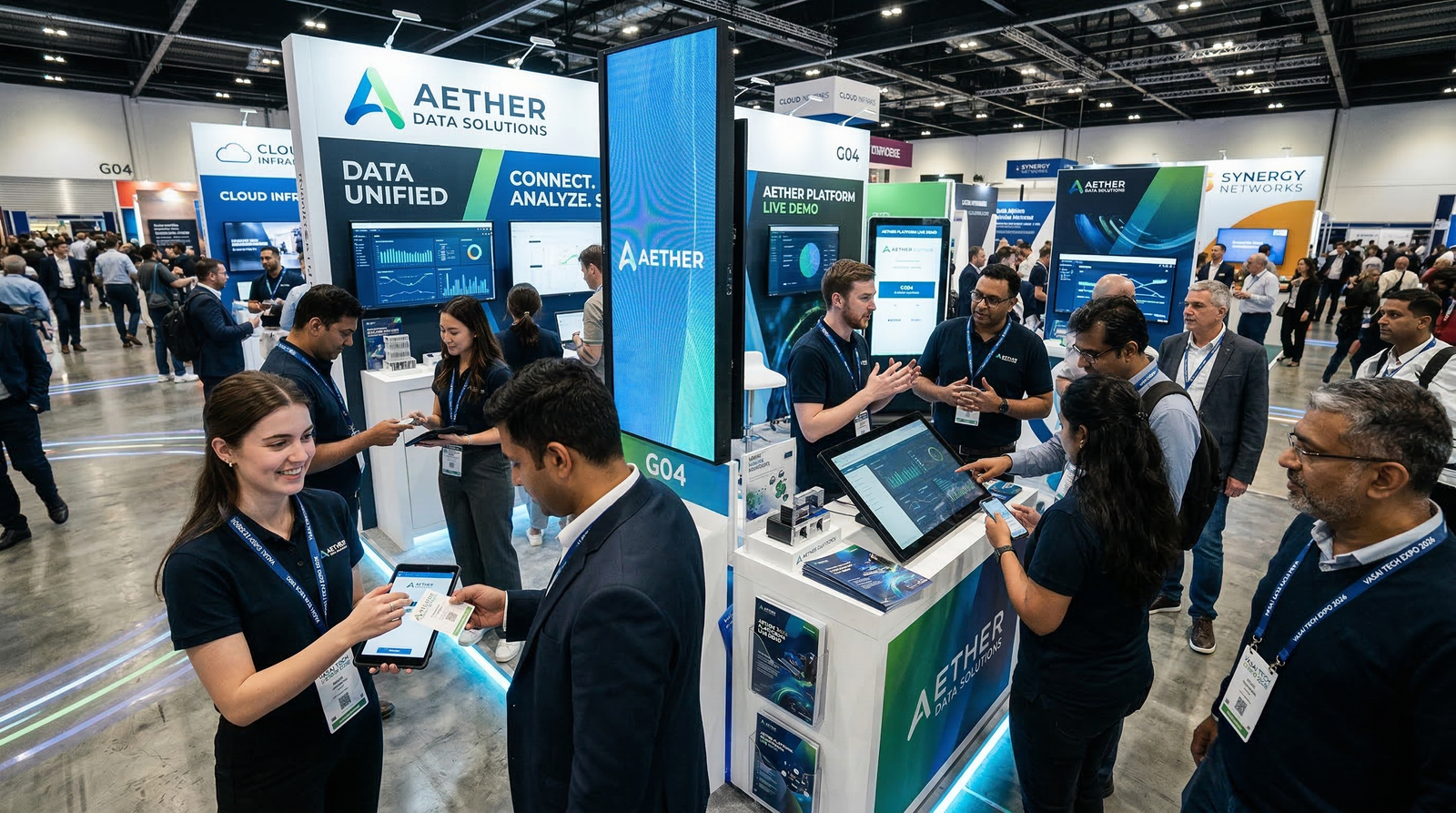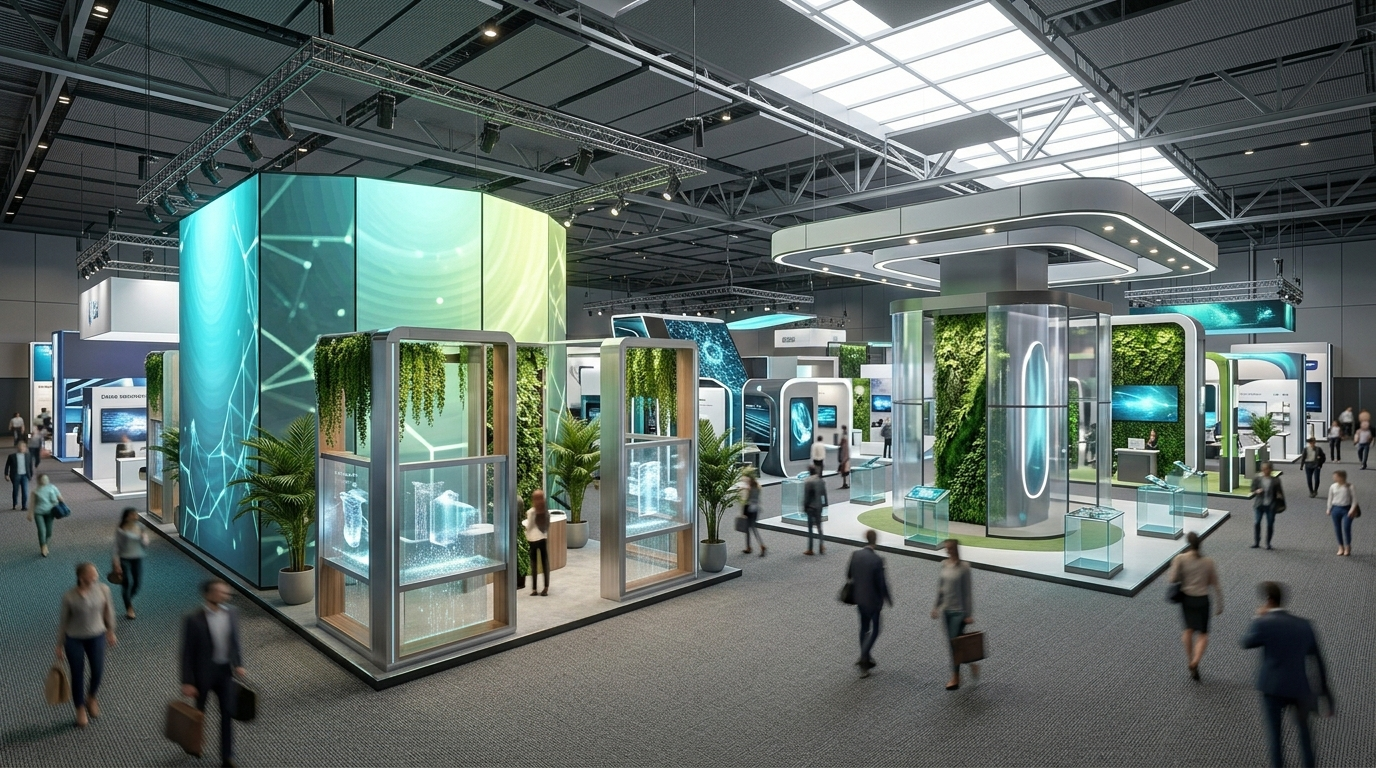
Exhibition booth design in 2026 is being defined by two forces: tighter budgets demanding smarter ROI, and attendee expectations for immersive, memorable brand experiences. From GITEX Global in Dubai to CES in Las Vegas and Hannover Messe in Germany, the same shifts are showing up on the floor of every major trade show worldwide.
Whether you are planning a 9 sqm shell scheme or a 200 sqm custom build, these trends will shape what works, what gets ignored, and what wins awards this year.
1. Modular and Reusable Booth Systems
The single biggest shift in 2026 is the mainstream adoption of modular booth systems. Brands are moving away from single-use custom builds toward reconfigurable systems that can be resized, reshipped, and repurposed across multiple shows.
Why it matters:
- A custom booth built for one show costs between $15,000 and $80,000 USD (INR 12.5 lakh to INR 67 lakh). A modular system of comparable size costs 40 to 60 percent less over a 3-show lifecycle.
- Systems like Octanorm, Aluvision, and local fabricators in Delhi and Mumbai now offer aluminium extrusion kits with graphic panel swaps.
- Hannover Messe 2025 saw a 34 percent increase in modular booth setups compared to 2022.
Planning your budget? Use the EventSphereX Budget Calculator to estimate modular vs. custom booth costs before you commit.
2. Sustainable Materials and Green Booth Certification
Sustainability is no longer a PR choice at global trade shows. It is increasingly a requirement. IFEMA Madrid, Messe Frankfurt, and NEC Birmingham now have sustainability scoring criteria for exhibitors, and Canton Fair in China introduced its Green Exhibitor Pledge in 2025.
What sustainable booths look like in 2026:
- FSC-certified plywood, recycled PET fabric panels, and bamboo structural elements
- Water-based inks replacing solvent printing for graphics
- LED-only lighting (zero halogen or incandescent fixtures permitted at many European venues)
In India, the India International Trade Fair (IITF) at Pragati Maidan has begun awarding green booth certifications. Exhibitors at Auto Expo 2026 who used recycled or biodegradable materials received preferential placement in hall layouts.
3. AI-Powered Personalisation at the Booth
Artificial intelligence is moving from backend analytics to the booth floor itself. The most innovative exhibitors at CES 2026 and GITEX Global 2025 used AI to create real-time personalised experiences for each visitor.
Key applications:
- AI kiosks that detect visitor badge data and display relevant product content instantly
- Conversational AI assistants replacing traditional hostesses for FAQs and lead capture
- Sentiment analysis cameras (used ethically with consent signage) to measure engagement zones within the booth
Estimated cost for an AI kiosk integration: $3,000 to $12,000 USD (INR 2.5 lakh to INR 10 lakh) per unit, depending on software licensing and hardware specification.
4. Immersive AR and VR Zones
Augmented and virtual reality have graduated from novelty to core engagement tools. At Hannover Messe 2025, over 60 percent of technology exhibitors incorporated some form of AR or VR into their booth experience.
What is working in 2026:
- AR product configurators on tablets or headsets, letting buyers visualise machinery, vehicles, or interiors in their own space
- VR walkthroughs of facilities, manufacturing plants, or real estate projects that cannot be physically transported to the show floor
- Mixed reality (MR) demos using Apple Vision Pro or Meta Quest 3 headsets for premium buyer appointments
In India, the IMC IT Show in Mumbai and India Lab Expo have seen a sharp rise in VR product demo stations. Indian tech exhibitors are deploying VR setups for INR 1.5 lakh to INR 5 lakh per event, far below the global average of $8,000 to $25,000 USD.
5. LED Walls and Dynamic Digital Canvases
Static printed graphics are losing ground fast. In 2026, high-resolution LED walls, transparent LED panels, and floor-to-ceiling digital canvases are the dominant visual statement at premium booths.
Trend breakdown:
| Display Type | Cost Range (USD) | Cost Range (INR) | Best For |
|---|---|---|---|
| Standard LED wall (3x2m) | $4,000 - $9,000 | INR 3.3L - 7.5L | Product launches, video loops |
| Transparent LED panel | $6,000 - $15,000 | INR 5L - 12.5L | Overlaying physical product |
| Curved/wraparound LED | $12,000 - $40,000 | INR 10L - 33L | Brand immersion zones |
| Floor LED display | $5,000 - $18,000 | INR 4.2L - 15L | Interactive brand storytelling |
Rental rates for LED walls at Indian trade shows have dropped 25 percent since 2023 due to increased supplier competition in Delhi, Mumbai, and Bengaluru.
6. Biophilic Design: Bringing Nature Into the Booth
Biophilic design, which integrates natural elements like plants, water features, natural textures, and organic shapes, has jumped from interior architecture into trade show booths with impressive results.
Why exhibitors are choosing it:
- Booths with live greenery report 20 to 40 percent longer average visitor dwell time, according to Freeman's 2025 Exhibitor Benchmark Report.
- It aligns with brand sustainability positioning without requiring major technology investment.
- It photographs exceptionally well, generating organic social media coverage from attendees.
At the Canton Fair 2025, several Chinese furniture and home goods exhibitors built "garden booth" layouts with moss walls, bamboo screens, and water features that became the most photographed spaces at the entire event. Cost for a high-quality biophilic booth element ranges from $500 to $5,000 USD (INR 42,000 to INR 4.2 lakh) depending on scale.
7. Minimalist, Open-Plan Booth Layouts
The days of the fully enclosed, carpet-and-counter booth are numbered. The 2026 aesthetic is open, airy, and uncluttered. Fewer walls, fewer products on display, and more intentional use of negative space.
What minimalist booths prioritise:
- A single hero product or message, rather than showing everything at once
- Comfortable seating for one-on-one conversations rather than brochure stands
- Curated material palettes of two or three finishes (concrete, wood, white) rather than multi-colour branded systems
This approach works especially well for high-value B2B categories like technology, machinery, and luxury goods, where buyers want conversation, not catalogues.
8. Hybrid Booth Experiences (Physical + Digital)
Post-pandemic hybrid participation has evolved from a workaround into a deliberate strategy. In 2026, top exhibitors at shows like GITEX and Auto Expo are designing their physical booth with simultaneous live-streaming and digital attendee engagement built in.
Hybrid booth features in 2026:
- Dedicated streaming corners with controlled lighting and branded backdrops for live LinkedIn or YouTube sessions from the show floor
- QR-driven digital catalogues replacing printed literature entirely
- Lead capture apps synced in real time with CRM, replacing business card bowls
9. Technology-Integrated Flooring and Ceilings
Floor and ceiling design are the two most underutilised dimensions in traditional booths. In 2026, innovative exhibitors are turning both into active brand surfaces.
What is being used:
- Interactive LED floors that respond to footsteps with visual effects, creating guided visitor journeys through the booth
- Suspended fabric tension canopies with integrated lighting rigs that define the booth from 50 metres away across a crowded hall
- Projection-mapped ceilings that create sky, forest, or product environments above visitors
This trend is most visible at large-format auto and technology shows. BMW's booth at Auto Expo 2026 used a tension canopy with embedded RGB lighting strips that changed colour across the day to reflect different vehicle model launches.
10. Data-Driven Booth Design and Post-Show Analytics
The final trend is not visible to attendees at all, but it is transforming how exhibitors invest in booths. In 2026, the best-performing exhibitors are using data to design their booths, not intuition.
How data is shaping booth design:
- Heat mapping via overhead cameras identifies which zones attract traffic and which are dead space
- Badge scanner data combined with dwell time metrics shows which product displays drove actual conversations
- Post-show surveys cross-referenced with CRM pipeline data help calculate true cost-per-qualified-lead from each show
Globally, exhibitors using structured analytics report 30 to 50 percent better ROI on their next show investment.
Global Trade Shows Setting the Design Standard in 2026
| Show | Location | Notable Booth Trend |
|---|---|---|
| CES 2026 | Las Vegas, USA | AI kiosks, transparent LED, spatial audio |
| GITEX Global | Dubai, UAE | Hybrid streaming, AR product demos |
| Hannover Messe | Germany | Modular systems, green certification |
| Canton Fair | Guangzhou, China | Biophilic design, open-plan layouts |
| Auto Expo 2026 | Greater Noida, India | Suspended canopies, EV experience zones |
| India International Trade Fair | New Delhi, India | Green booth certification pilot |
What This Means for Your Exhibition Budget in 2026
The cumulative effect of these trends is that booth design expectations have risen significantly, but so has the availability of cost-efficient technology options. A mid-size exhibitor spending $20,000 to $40,000 USD (INR 16.7 lakh to INR 33.4 lakh) can now access LED walls, AI kiosks, modular systems, and hybrid streaming setups that would have required a $100,000 budget just four years ago.
The key is prioritising two or three trends that align with your brand objectives and target buyer profile, rather than trying to incorporate every trend at once.
FAQ
Q: What is the biggest exhibition booth design trend in 2026? A: Modular and reusable booth systems are the dominant shift, driven by budget efficiency and sustainability requirements at major international venues.
Q: How much does an exhibition booth cost in 2026? A: A shell scheme with graphics starts at $3,000 to $8,000 USD (INR 2.5L to 6.7L). A fully custom booth with LED walls and tech integration can exceed $80,000 USD (INR 67L) for large-format shows.
Q: Are AI and AR booths worth the investment for smaller exhibitors? A: Yes, but selectively. A single AI kiosk or tablet-based AR demo delivers strong engagement for $2,000 to $5,000 USD. Full spatial computing setups suit companies with high-value products and long sales cycles.
Q: Is biophilic design practical for trade shows? A: Absolutely. Even small plant installations and moss walls can be sourced locally at most trade show cities. Indian exhibitors have access to affordable plant rental services starting from INR 15,000 for a show.
Q: What is sustainable booth design and does it cost more? A: Sustainable booth design uses recycled, reusable, or biodegradable materials and LED-only lighting. Modular systems made with sustainable materials often cost less per show appearance than disposable custom builds.
Q: How do I start using data analytics for my booth? A: Start with a badge scanner and a simple spreadsheet tracking time, zone, and follow-up status per lead. Advanced heat mapping tools are available for $500 to $2,000 USD per event.