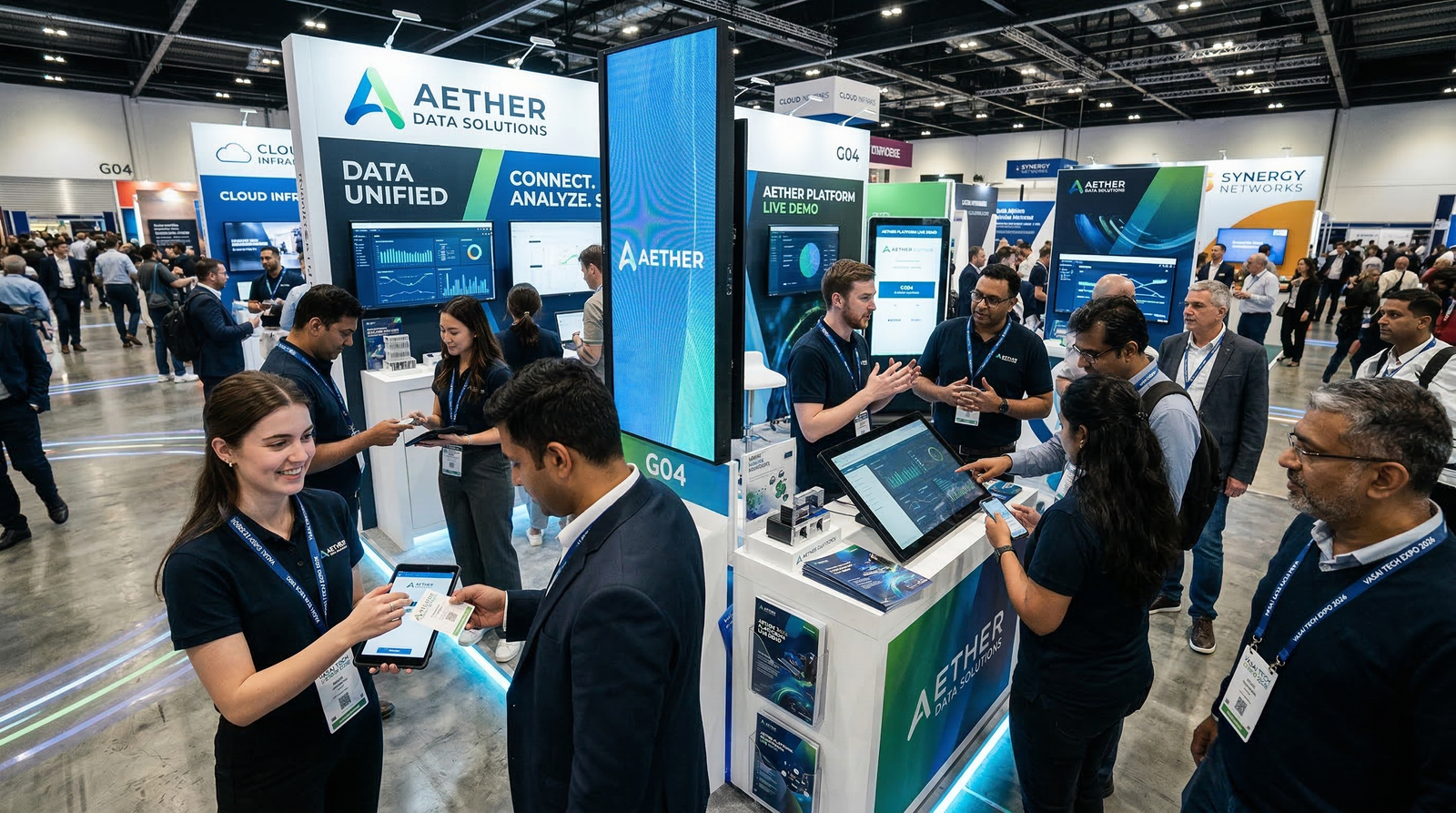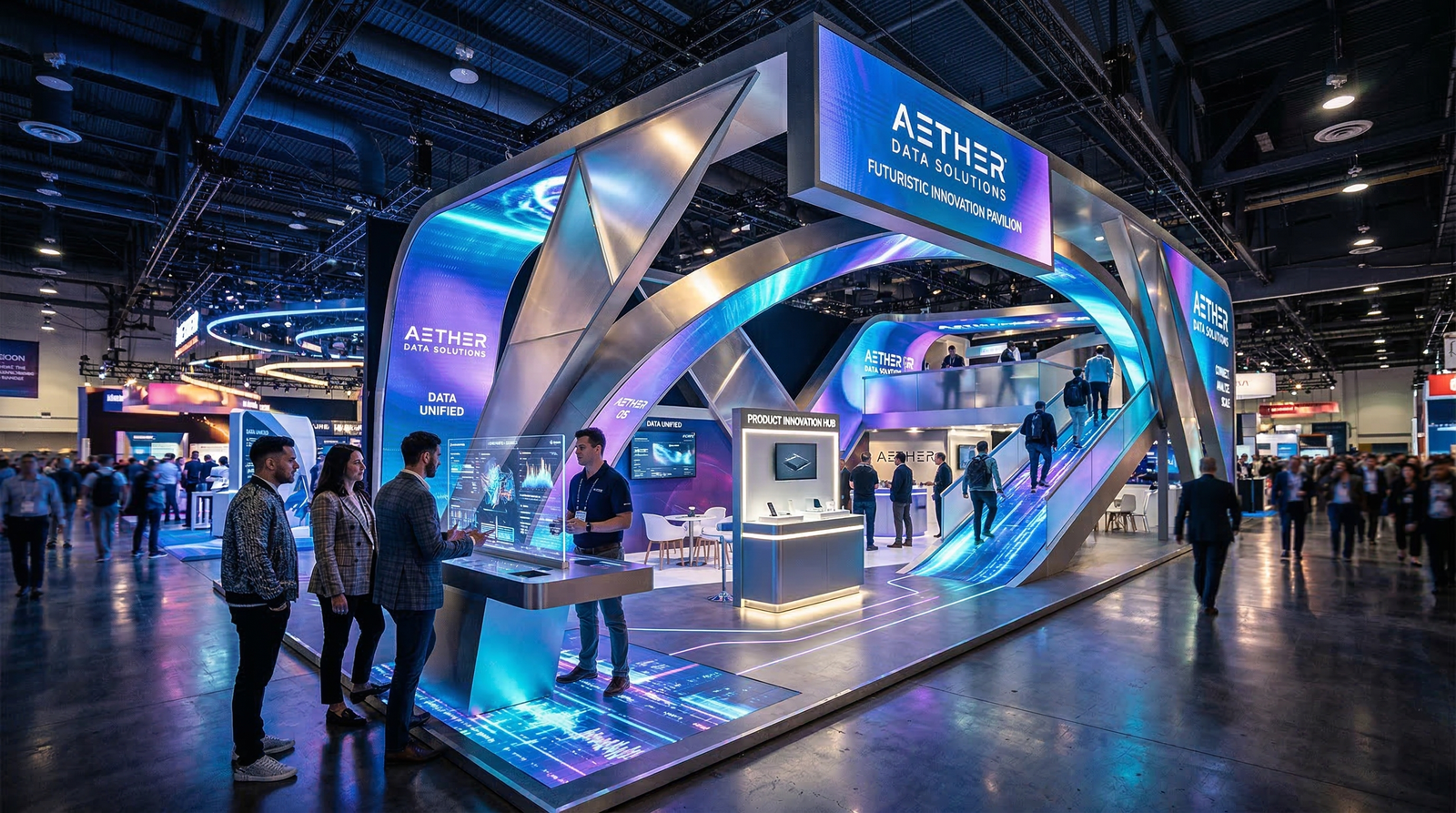
Indian companies spend ₹3-15 lakh on exhibition stall design. Most focus on making it "look good." The smart ones design for ROI — every element engineered to attract, engage, and convert visitors into leads.
The Stall Design ROI Framework
Level 1: Attract (Get Them to Stop)
The average visitor at an Indian trade show walks past 200+ stalls in 4 hours. You have 3 seconds to make them stop.
What works:
- Height: Tall elements (hanging banners, totems) visible from 20+ meters away
- Movement: LED screens with motion graphics, rotating displays, live demos
- Contrast: Don't blend in — if everyone uses white, go bold with dark colors
- Sound zone: Subtle audio that doesn't annoy neighbors but creates curiosity
- Live activity: A demo, presentation, or game happening every 30 minutes
What doesn't work:
- Static banners with too much text
- Closed-off stalls that look uninviting
- Dark, cave-like structures with no visibility
Level 2: Engage (Keep Them at Your Stall)
Getting them to stop is step one. Keeping them for 3-5 minutes is where conversion happens.
Engagement elements:
- Interactive touchscreens showing product catalogs, videos, or configurators
- Live product demonstrations every 30-45 minutes
- Sampling stations for FMCG, F&B, and beauty brands
- VR/AR experiences for real estate, automotive, and tech brands
- Comfortable seating for extended conversations (especially for B2B)
Level 3: Convert (Capture Their Information)
The best-looking stall is worthless if visitors leave without giving you their contact details.
Conversion elements:
- QR code for instant lead capture form
- "Scan to download our catalog" — content gating
- Business card drop for a prize draw
- Demo booking system for follow-up meetings
- WhatsApp QR to join your business updates
Stall Design Costs in India (2026)
Stall Size
Shell Scheme (Basic)
Custom Build (Standard)
Custom Build (Premium)
9 sqm (3x3)
₹30-50K
₹80K-1.5L
₹2-4L
18 sqm (6x3)
₹50-80K
₹1.5-3L
₹4-8L
36 sqm (6x6)
₹80K-1.2L
₹3-6L
₹8-15L
54 sqm (9x6)
₹1-1.5L
₹5-10L
₹12-25L
72+ sqm (island)
₹1.5-2L
₹8-15L
₹20-50L
Costs include design, fabrication, installation, and dismantling. Excludes AV equipment rentals.
Design Elements That Drive ROI
The Welcome Zone (First 1 meter)
- Open, inviting entrance — no barriers
- Clear brand name visible from the aisle
- Friendly staff positioned to greet, not block
- Product or demo visible from outside
The Experience Zone (Center)
- Main product display or demonstration area
- Interactive elements
- Seating for presentations
- Good lighting on key products
The Conversion Zone (Side or back)
- Semi-private meeting area for serious discussions
- Lead capture station
- Product samples or literature
- Business card and catalog exchange
The Storage Zone (Hidden)
- Stock room for extra materials
- Staff rest area
- Electrical connections and server equipment
Common ROI Killers
1. Spending 70% on design, 10% on engagement — A beautiful empty stall is a waste 2. No clear call-to-action — Visitors don't know what to do at your stall 3. Understaffing — 3 staff for a 36 sqm stall is insufficient during peak hours 4. No follow-up plan — Leads collected but never contacted within 48 hours 5. Ignoring traffic flow — Placing key elements where visitors can't see them from the aisle
Measuring Stall Design ROI
Metric
Formula
Good Benchmark
Footfall rate
Visitors to stall ÷ total exhibition footfall
5-10%
Engagement rate
Visitors who stayed 2+ min ÷ total visitors
30-40%
Lead capture rate
Leads captured ÷ total visitors
20-30%
Cost per lead
Total stall cost ÷ leads captured
₹200-800
Conversion rate
Deals closed ÷ leads captured
5-15%
A well-designed stall that costs ₹5 lakh and generates 500 qualified leads gives you a cost per lead of ₹1,000 — comparable to digital advertising but with the trust advantage of face-to-face interaction.