The pandemic forced events online. In 2026, virtual and hybrid events have matured from necessity into a strategic format with unique advantages. But the rules have changed — what worked in 2020 doesn't work now.
Virtual Events: What Still Works
Webinars (30-90 minutes)
- Best for: Lead generation, thought leadership, product education
- Ideal audience: 50-500 remote attendees
- Platform cost: Free (Zoom, Google Meet) to ₹5-20K/month (professional platforms)
- Key to success: Strong speaker, interactive polls, clear CTA at the end
Virtual Conferences (Half-day to multi-day)
- Best for: Industry conferences with geographically dispersed audiences
- Ideal audience: 200-5,000 attendees
- Platform cost: ₹1-5 lakh per event
- Key to success: Pre-recorded + live mix, networking rooms, gamification
Virtual Exhibitions
- Best for: Product showcases where physical presence isn't essential
- Ideal audience: 500-10,000 visitors
- Platform cost: ₹3-10 lakh
- Key to success: 3D booth experiences, video demos, live chat with exhibitors
Hybrid Events: The Best of Both Worlds
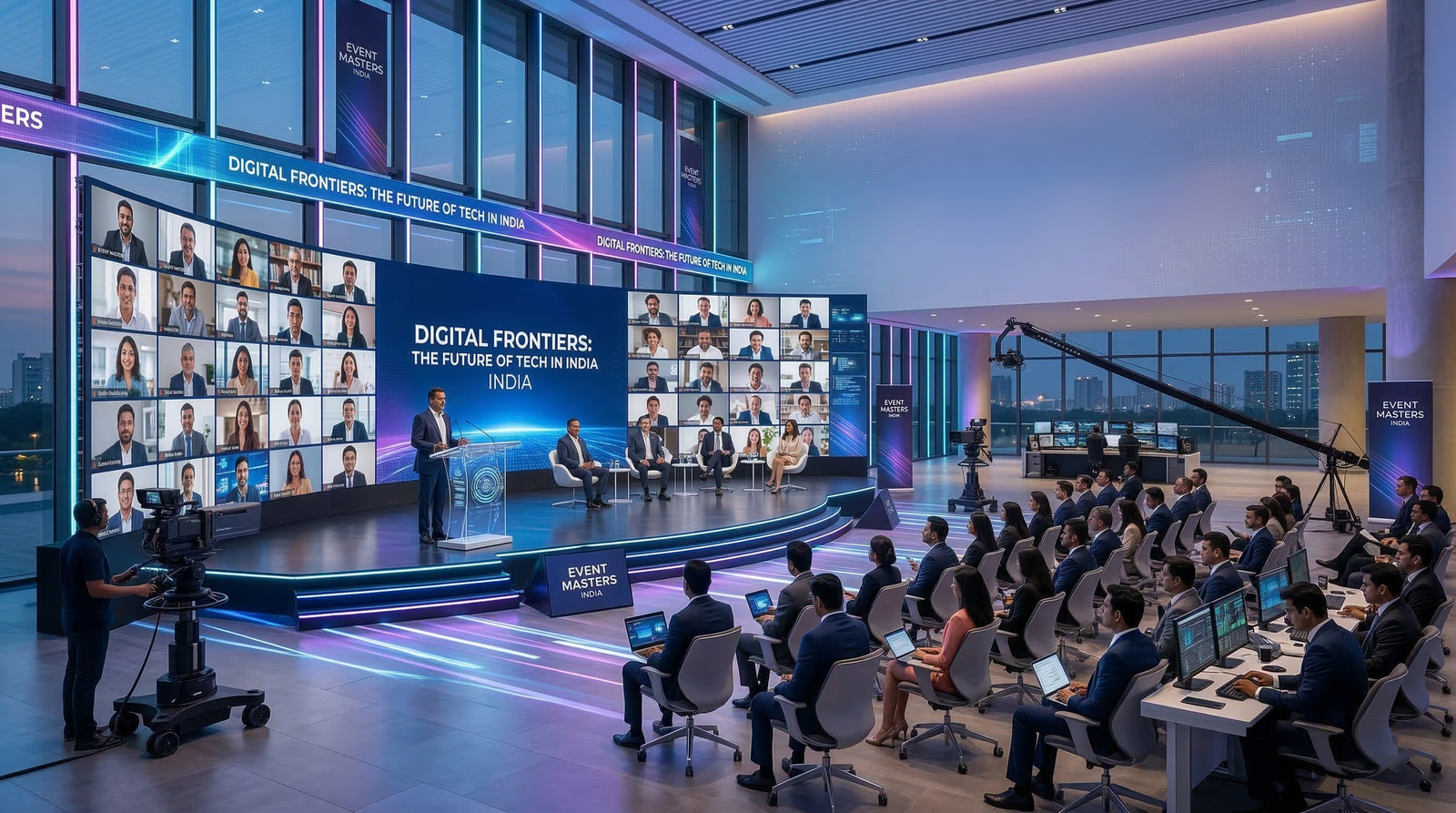
Hybrid events combine an in-person event with a virtual component, allowing remote attendees to participate.
What Works in Hybrid
1. Live stream of main stage sessions — Remote attendees watch in real-time 2. Virtual networking rooms — Online attendees can schedule video meetings with speakers and exhibitors 3. Shared Q&A — Questions from both in-person and virtual audiences displayed on screen 4. On-demand replay — Recorded sessions available for 30 days post-event 5. Virtual exhibition booths — Exhibitors reach both audiences simultaneously
What Doesn't Work
1. Treating virtual as an afterthought — "Just point a camera at the stage" creates terrible experience 2. Same ticket price — Virtual tickets should be 30-50% of in-person price 3. No dedicated virtual host — Remote audiences need someone engaging them 4. Ignoring time zones — If you have a global remote audience, schedule key sessions for overlap hours
Platform Options for India
Free / Budget
Platform
Best For
Limit
Zoom (free)
Webinars, small meetings
40 min, 100 participants
Google Meet
Internal events, workshops
60 min, 100 participants
YouTube Live
One-way broadcast
Unlimited viewers
StreamYard
Multi-speaker live shows
Branding on free plan limited
Professional (₹1-5 lakh/event)
Platform
Best For
Key Feature
Airmeet
Virtual conferences, networking
Speed networking, booth expo
Hopin
Large hybrid events
Multi-stage, expo, networking
Hubilo
Enterprise conferences
Advanced analytics, branding
Zuddl
Indian enterprise events
Made in India, local support
Enterprise (₹5-20 lakh/event)
Platform
Best For
Key Feature
Cvent
Large corporate events
Full event management suite
ON24
Webinar-heavy organizations
Lead scoring, integrations
Bizzabo
Premium hybrid events
Event experience platform
Production Requirements for Hybrid Events
Minimum Setup (₹1-3 lakh)
- 2 cameras (main stage + audience)
- Professional audio capture (wireless lapel mics)
- Encoding laptop with streaming software (OBS)
- Stable internet (minimum 50 Mbps upload, wired connection)
- Basic graphics overlay (lower thirds, logo)
Professional Setup (₹3-8 lakh)
- 3-4 cameras with switcher
- Professional audio mixer
- Dedicated streaming crew (2-3 people)
- LED wall or confidence monitor for virtual Q&A
- Green room for speakers with teleprompter
- Dedicated internet line (100+ Mbps)
Premium Setup (₹8-20 lakh)
- Multi-camera cinematic production
- Virtual set or AR elements
- Real-time graphics and live polls on screen
- Professional broadcast-quality encoding
- Redundant internet connections
- On-site and remote production team
Engagement Strategies for Virtual Audiences
The biggest challenge: keeping remote attendees engaged. Average attention span for virtual events is 20 minutes.
During Sessions
- Live polls every 10 minutes — keeps audience clicking
- Chat moderator — actively responds to comments, highlights questions
- Speaker interaction — directly address virtual audience by name
- Breakout rooms — small group discussions after each session
Between Sessions
- Virtual networking — AI-matched 1-on-1 video meetings
- Gamification — Points for attending sessions, visiting booths, chatting
- Leaderboard — Top engaged attendees win prizes
- Social wall — Live social media feed from event hashtag
Measuring Virtual/Hybrid Event Success
Metric
Good Benchmark
Registration to attendance rate
40-60%
Average watch time
60-70% of session length
Chat/Q&A participation
15-25% of attendees
Poll response rate
30-50%
Virtual booth visits
20-30% of attendees
Net Promoter Score
40+
Lead quality (for sponsors)
10-15% hot leads
The Future: AI-Powered Virtual Events
- AI matchmaking — Suggests who to network with based on interests and goals
- Real-time translation — Sessions available in multiple languages simultaneously
- AI summaries — Instant takeaway documents generated after each session
- Personalized agendas — AI recommends sessions based on attendee profile
- Smart follow-ups — Automated, personalized post-event emails based on behavior
Virtual and hybrid aren't replacements for in-person events. They're extensions that expand your reach, capture more data, and create content that lives beyond the event day.