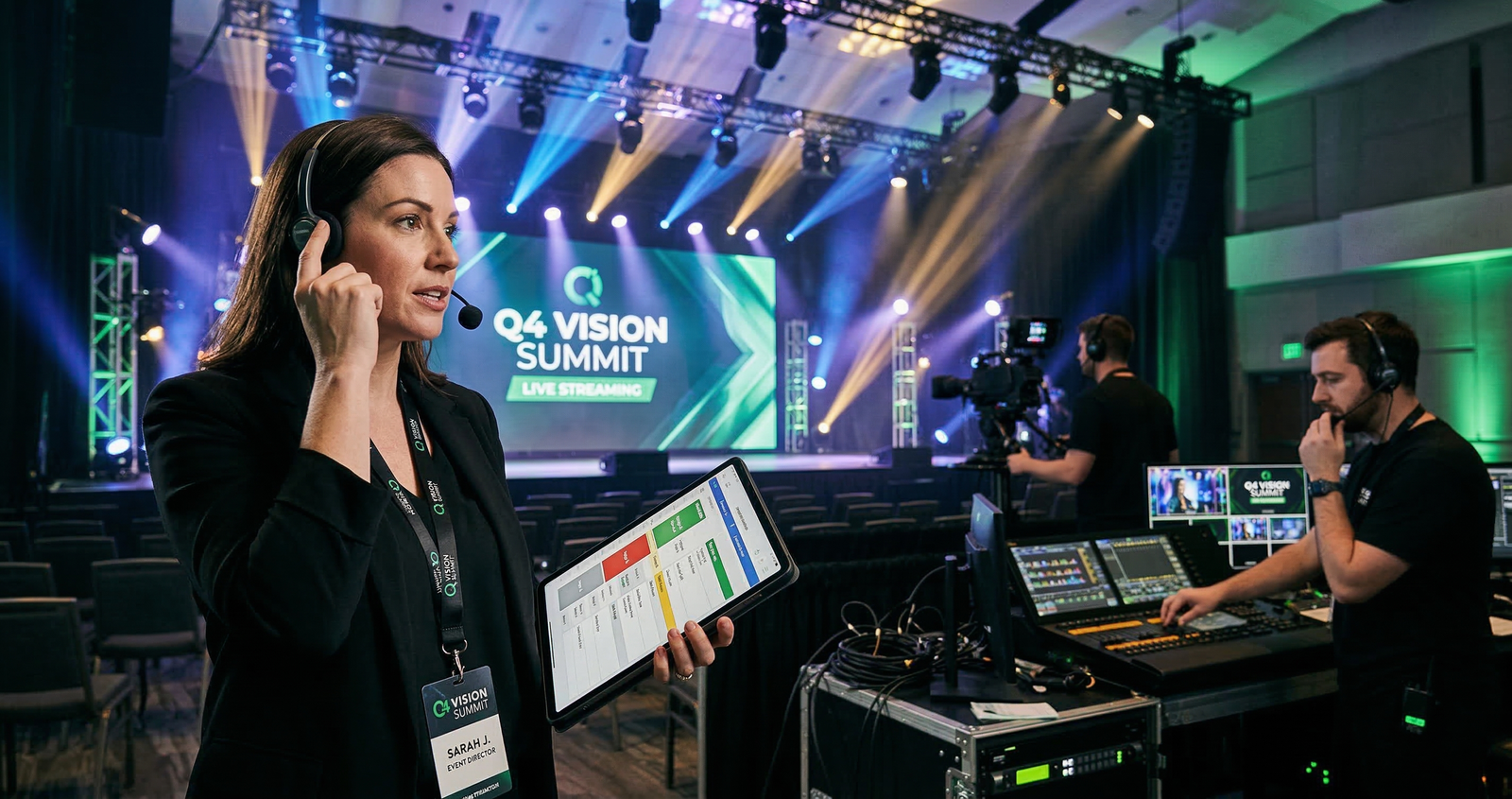
The best event management software in 2026 depends on your event size, team capacity, and budget. This guide cuts through the marketing noise to give you honest comparisons across 10 major platforms so you can choose with confidence.
Why Choosing the Wrong Platform Costs You More Than Money
Event software shapes how attendees register, how sponsors engage, and how your team survives the week before show day. A mismatch means wasted onboarding time, hidden fees, and a support team that goes quiet when you need them most.
Quick Recommendation Table
| Scenario | Best Pick | Runner-Up |
|---|---|---|
| Small teams (under 3 people) | Eventbrite | Zoho Backstage |
| Large conferences (1,000+) | Cvent | Bizzabo |
| Hybrid and virtual events | Hopin | Hubilo |
| Best free option | Eventbrite (free tier) | Airtable |
| Best value under $200/month | Whova | Swoogo |
| Enterprise with CRM integration | Cvent | Bizzabo |
| Event agencies, multiple clients | Monday.com | Airtable |
| Indian market, regional support | Zoho Backstage | Hubilo |
The 10 Platforms: Honest Reviews
1. Cvent
What it does best: Cvent is the enterprise standard. Its venue sourcing network, attendee management, and onsite check-in tools are unmatched in depth. Large corporates and associations running multi-day conferences rely on it for reliability and compliance.
What it is weak at: Interface feels dated. Learning curve is steep. Small teams find it overwhelming. Sales process can take weeks before you see a real price.
Pricing: Starts around $1,500 to $2,500 per event. Enterprise contracts run $10,000 to $30,000+ per year. No transparent public pricing.
Best for: Corporate event teams, associations, and government organizations running large-scale events.
2. Bizzabo
What it does best: Strong attendee engagement features, in-depth analytics, and a clean modern UI. Speaker and sponsor management modules are among the best in the market.
What it is weak at: Pricing has moved fully enterprise, making it inaccessible to mid-market buyers. App customization is limited for what it charges.
Pricing: Enterprise contracts typically start at $15,000 to $20,000 per year. Free trial available on request.
Best for: Mid-to-large event teams focused on brand experience and post-event ROI reporting.
3. Eventbrite
What it does best: Easiest platform to get started on, with a powerful free tier. Its discovery marketplace gives events organic visibility that no other platform offers.
What it is weak at: Built for public ticketing, not complex event management. Lacks robust sponsor management and post-event analytics.
Pricing:
- Free: Up to 25 tickets per event
- Flex: 3.7% plus $1.79 per paid ticket
- Pro: $29/month (100 attendees), $79/month (250), $159/month (unlimited)
Best for: Independent organizers, community events, workshops, and small conferences needing quick setup.
4. Hubilo
What it does best: Built for hybrid and virtual engagement. Gamification features, virtual networking lounges, and live polling keep online attendees genuinely engaged. Strong roots in the Indian market with local support.
What it is weak at: Onsite event features lag behind Cvent and Whova. Works best when virtual is the primary format.
Pricing: Starts at approximately $800 to $1,200 per virtual event. Hybrid packages typically above $2,000.
Best for: Virtual-first conferences, internal town halls, hybrid summits, and India-based companies.
5. Hopin
What it does best: Pioneered the virtual event format. Multi-stage setup, expo booths, and networking features are mature and reliable.
What it is weak at: Has gone through significant product pivots and company restructuring. Some features have been deprecated or moved to paid add-ons.
Pricing:
- Starter: Free (up to 100 attendees, 2 events/month)
- Growth: $99/month (up to 500 attendees)
- Business: Custom pricing
Best for: Virtual and hybrid event organizers who need a stable, proven platform.
6. Swoogo
What it does best: Seriously underrated. Unlimited events, unlimited contacts, and strong registration customization at a flat monthly price. Event microsite builder is genuinely good.
What it is weak at: Limited virtual and hybrid tools. Smaller app ecosystem. Lacks marketplace reach.
Pricing:
- Starter: $99/month (1 user, unlimited events)
- Professional: $499/month (5 users)
- Enterprise: Custom
Best for: Event agencies and teams running many events per year who need flat-rate pricing.
7. Whova
What it does best: Punches well above its price point. Conference app features (agenda, networking, session Q&A, lead retrieval) are excellent. Attendee satisfaction scores consistently rank high.
What it is weak at: Event website builder is basic. Backend reporting lacks depth. Virtual features are functional but not impressive.
Pricing: Starts at $1,000 to $1,500 per event. Annual licenses available.
Best for: Academic conferences, professional associations, and mid-size in-person events.
8. Monday.com for Events
What it does best: Exceptional at managing operational complexity. Templates for run-of-show, vendor management, and task tracking are among the best.
What it is weak at: Cannot manage attendee registration, ticketing, or onsite check-in. Always needs a second tool.
Pricing: Free (2 users), Basic $9/user/month, Standard $12/user/month, Pro $19/user/month
Best for: Event agencies managing complex multi-vendor events needing project management.
9. Airtable for Events
What it does best: Flexible database for custom event workflows. Speaker tracking, vendor databases, content calendars, and run-of-show documents with more flexibility than any dedicated tool.
What it is weak at: No attendee-facing features. Requires significant setup. Non-technical users struggle with it.
Pricing: Free (5 users, 1,000 records), Team $20/user/month, Business $45/user/month
Best for: Tech-savvy teams building custom event ops systems.
10. Zoho Backstage
What it does best: Most complete event platform at its price point, especially for teams in the Zoho ecosystem. Registration, event websites, speaker management, and analytics all included. INR pricing and local support for Indian companies.
What it is weak at: UI is not as polished as Bizzabo or Whova. Virtual features are limited. Mobile check-in has had stability issues in high-traffic scenarios.
Pricing: Free (1 event, 100 attendees), Basic $99/month, Professional $199/month
Best for: Small to mid-size companies and organizations already using Zoho CRM.
Full Feature Comparison Table
| Platform | Registration | Mobile App | Virtual/Hybrid | Speaker Mgmt | Analytics | Free Tier | Starting Price |
|---|---|---|---|---|---|---|---|
| Cvent | Excellent | Yes | Yes | Yes | Enterprise | No | ~$1,500/event |
| Bizzabo | Excellent | Yes | Yes | Excellent | Advanced | No | ~$15K/year |
| Eventbrite | Good | Yes | Basic | No | Basic | Yes | Free / $29/mo |
| Hubilo | Good | Yes | Excellent | Good | Good | No | ~$800/event |
| Hopin | Good | Yes | Excellent | Good | Good | Yes | Free / $99/mo |
| Swoogo | Excellent | Yes | Basic | Good | Good | No | $99/mo |
| Whova | Excellent | Excellent | Basic | Good | Good | No | ~$1,000/event |
| Monday.com | No | Yes | No | No | Basic | Yes | $9/user/mo |
| Airtable | No | Yes | No | No | Custom | Yes | Free / $20/user |
| Zoho Backstage | Good | Yes | Basic | Good | Good | Yes | Free / $99/mo |
Budget Tier Guide
Free Tools (Zero Budget)
Eventbrite (free tier), Hopin (Starter), Zoho Backstage (1 event), Airtable. Works for one-off or small events under 100 attendees.
Under $100 per Month
Hopin Growth ($99), Zoho Backstage Basic ($99), Swoogo Starter ($99). Works for teams running 1 to 5 events per month with under 500 attendees.
$100 to $500 per Month
Swoogo Professional ($499), Zoho Backstage Professional ($199). Suits event agencies and corporate teams running regular programs.
Enterprise (Custom Pricing)
Cvent, Bizzabo, Hubilo, Whova annual. Makes sense when your event program generates direct revenue or significant brand impact.
How to Choose: 5 Questions Before You Buy
- How many events do you run per year? If more than 6, flat-rate pricing (Swoogo, Zoho) beats per-event pricing every time.
- What is your primary format? Virtual-first needs Hopin or Hubilo. In-person-first needs Whova or Cvent.
- Do you need ticketing or just registration? Eventbrite is for ticketing. Most others handle registration without marketplace distribution.
- What tools are you already using? Zoho Backstage if you use Zoho CRM. Airtable if your team is spreadsheet-native.
- Who will run it? A solo event manager needs simplicity (Eventbrite, Whova). An IT-backed team can handle Cvent's complexity.
Build Your Event Budget Before You Pick a Tool
Before committing to any platform, know your complete event cost picture. The EventSphereX Budget Calculator lets you map costs across venue, production, staffing, and tech in one place.
FAQ
Q: What is the best free event management software? A: Eventbrite's free tier is the most practical for public events. Hopin's Starter plan is best for virtual events. Zoho Backstage offers one free event with full features.
Q: Is Cvent worth the price for small teams? A: No. Cvent's value is in scale, compliance, and venue sourcing. Teams running fewer than 10 events per year with under 500 attendees will not use enough of its features. Whova or Swoogo serve small teams better.
Q: Which platform is best for hybrid events? A: Hopin and Hubilo are the strongest for genuine hybrid execution. Hubilo has stronger gamification; Hopin has a larger existing user base.
Q: How much does event management software cost? A: Free tiers exist for basic use, mid-market tools run $99 to $500 per month, and enterprise platforms cost $10,000 to $50,000 per year.
Q: Can I use Monday.com or Airtable as my only event tool? A: Not if you need attendee registration or ticketing. Both need to be paired with a registration platform. Many agencies use Monday.com for internal ops alongside Eventbrite or Zoho for attendee-facing functions.
Q: Which event software is best for the Indian market? A: Zoho Backstage offers INR pricing, local support, and Zoho CRM integration. Hubilo, founded in India, also has strong regional support. For large Indian corporates running global events, Cvent remains the enterprise standard.
Q: Is Bizzabo better than Cvent? A: They serve different priorities. Cvent leads on venue sourcing, compliance, and scale. Bizzabo leads on attendee experience, modern UI, and analytics. Associations prefer Cvent; brand-driven corporate teams often prefer Bizzabo.
Related Articles
- How to Plan a Corporate Event: Complete Step-by-Step Guide
- AI Tools Every Event Planner Should Use in 2026
- How to Calculate Event ROI: The Formula Every Planner Needs
This article reflects independent editorial research. No platform has paid for placement or favorable coverage. Pricing is based on publicly available data as of April 2026.