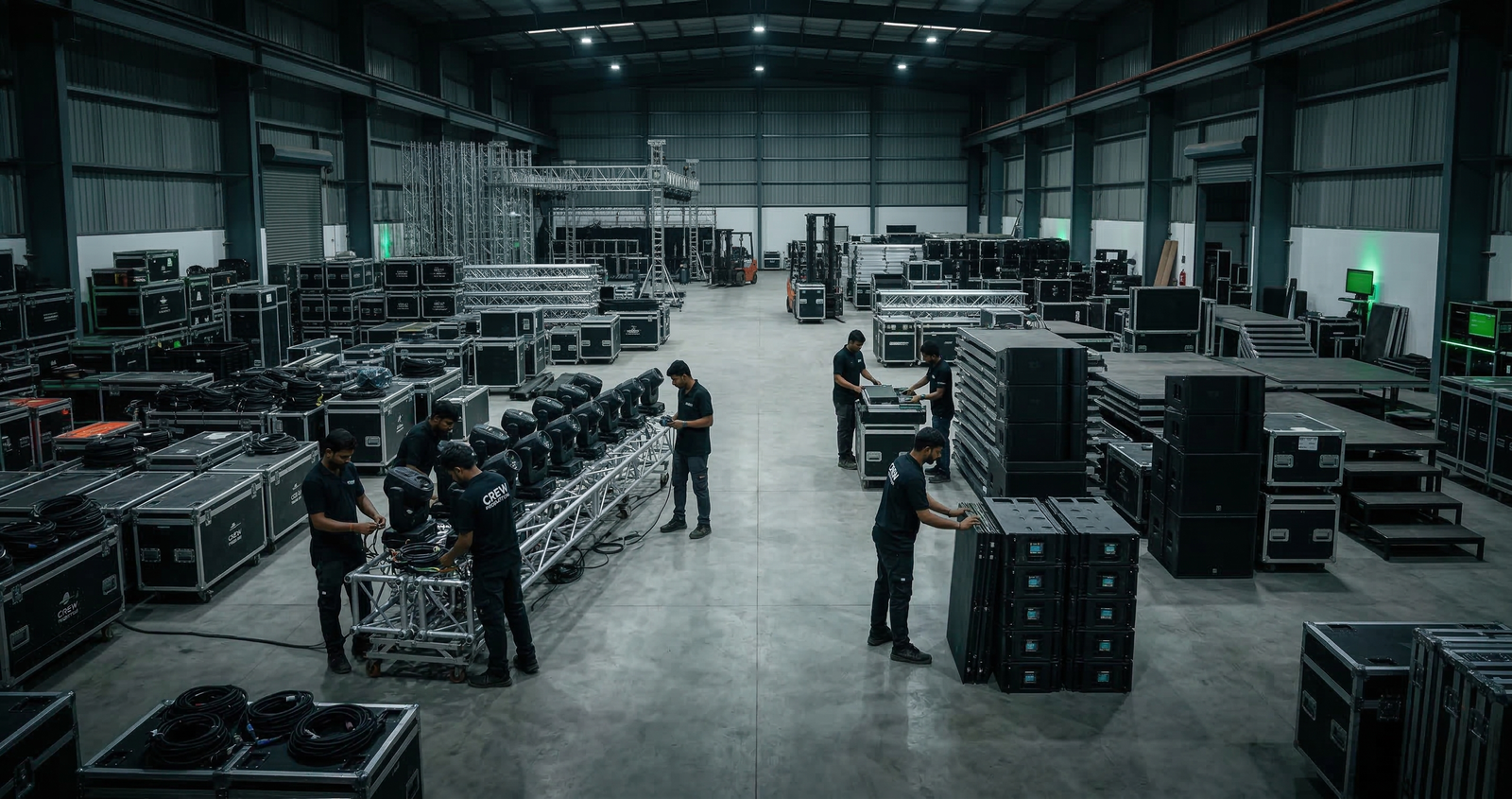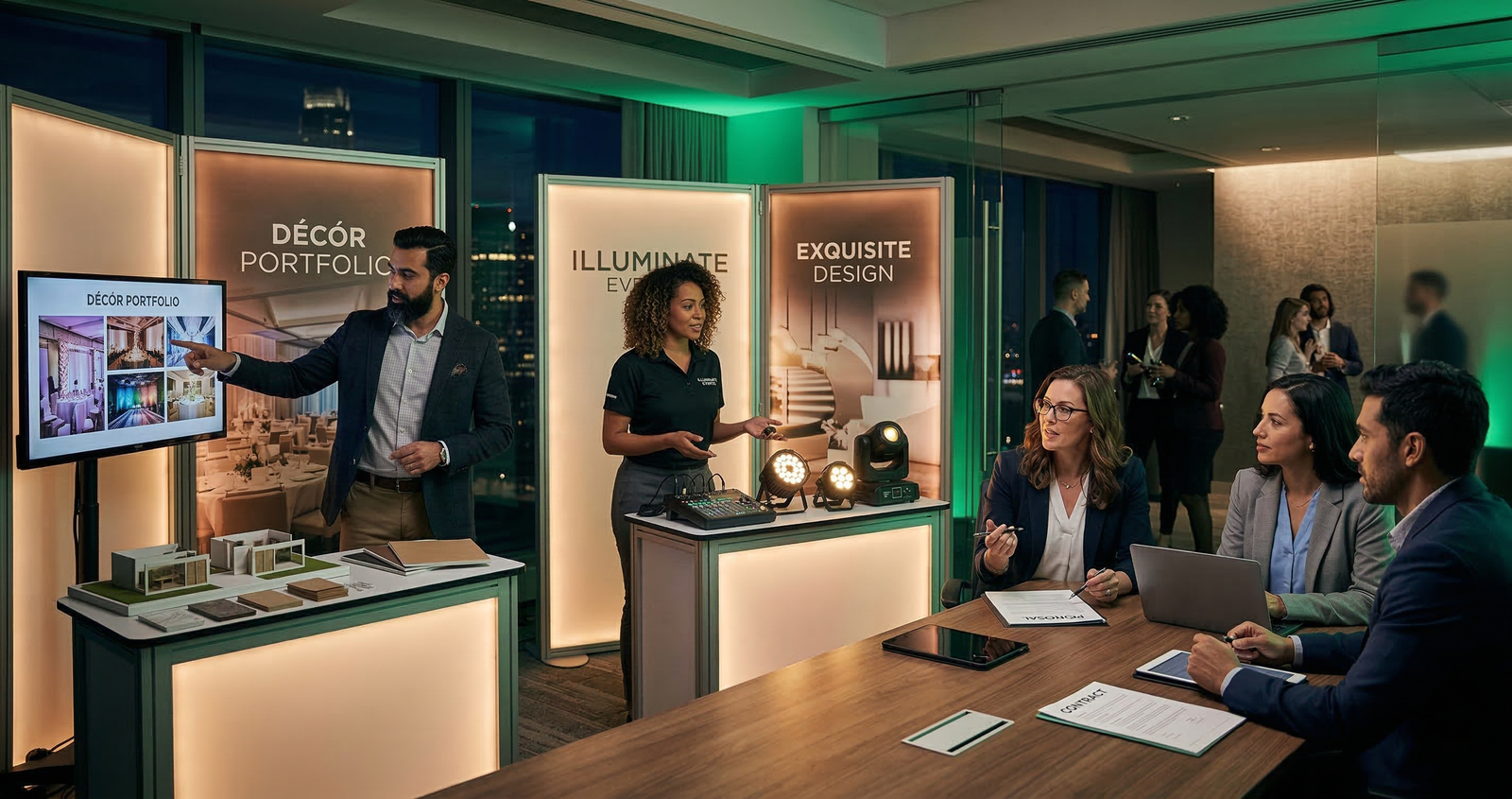
If you are an event vendor in India — whether you supply AV equipment, catering, decor, fabrication, photography, or event tech — your growth depends on one thing above all else: being found by the right event planners at the right time. The best vendors are not always the most experienced. They are the most visible and the easiest to hire.
India's events industry crossed ₹10,000 crore in 2025 and continues to grow at 15-20% annually. Corporate conferences, weddings, exhibitions, government summits, product launches, and MICE events are happening every single day across Tier 1, 2, and 3 cities. The opportunity is enormous — but so is the competition. Thousands of vendors compete for the same contracts, and the ones who win consistently are those who have mastered two skills: discoverability and reliability.
This guide breaks down exactly how to get listed, get noticed, and turn enquiries into signed contracts.
Part 1: Where to Get Listed
Getting listed is the foundation. If event planners cannot find you, they cannot hire you. Here are the platforms and channels that matter most in India.
1. Online Event Industry Directories
When an event planner in Bengaluru needs an AV vendor for a 500-person conference next month, their first step is almost always an online search. Being listed in the right directories puts you directly in front of decision-makers.
Key directories for Indian event vendors:
- EventSphereX Industry Directory — India's dedicated event industry directory, searchable by vendor category, city, and service type. This is purpose-built for event professionals and connects you directly with planners looking for exactly what you offer.
- IndiaMART — Particularly effective for equipment rental companies, fabrication firms, and suppliers of physical goods like truss, LED panels, and staging materials. IndiaMART generates high-intent B2B leads.
- JustDial and Sulekha — Strong for local service discovery, especially in Tier 2 and Tier 3 cities where event planners still search by location first.
- WedMeGood, WeddingWire India, and Shaadi Saga — Essential if you serve the wedding market. Wedding vendors who are listed and reviewed on these platforms report 3-5x more inbound enquiries compared to relying on word of mouth alone.
- TradeIndia — Useful for fabrication companies and large-scale equipment suppliers.
Pro tip: Do not just create a listing and forget it. Upload high-quality photos (minimum 20), write a detailed service description with the cities you serve, and update your profile every quarter with fresh project photos and updated pricing.
2. Google Business Profile (Non-Negotiable)
This is arguably the single most important listing for any vendor operating locally. When an event planner searches "AV rental Mumbai," "caterer near Pragati Maidan," or "wedding decorator Jaipur," your Google Business Profile is often the first result they see — above paid ads, above directories.
How to optimise your profile:
- Complete every section: business name, address, phone, website, hours, service area, and category
- Upload at least 20-30 photos showing your work at real events — setup shots, finished stages, food spreads, lighting rigs, and your team in action
- Collect Google reviews aggressively. After every event, send the client a direct link to your Google review page. Aim for 50+ reviews within your first year. A vendor with 80 five-star reviews will always beat a competitor with 5 reviews, regardless of who is technically better
- Post updates weekly: share recent event photos, seasonal offers, and equipment additions
- Use Google Posts to announce participation in trade shows or new service launches
Real example: A Delhi-based AV rental company went from 3 enquiries per month to 25+ after investing six months in their Google Business Profile — adding 100 photos, collecting 120 reviews, and posting weekly updates. They spent zero on advertising.
3. Social Media Profiles
Different platforms serve different vendor types. Choose your primary platform based on what you sell.
Instagram — Essential for visual vendors: decorators, florists, lighting designers, photographers, and fabricators. Post Reels showing event transformations, before-and-after setups, and behind-the-scenes content. Use location tags and hashtags like #EventsIndia, #WeddingDecorDelhi, #CorporateEventMumbai.
LinkedIn — Essential for B2B vendors: AV companies, event tech providers, corporate caterers, and anyone targeting the MICE and corporate conference market. Share case studies, post about industry trends, and connect directly with event managers at large companies and agencies.
YouTube — Underrated but powerful for AV companies, fabricators, and staging providers. Upload setup timelapses, equipment demos, and event highlight reels. A 2-minute video showing your team setting up a 200-sqm LED wall at an auto expo in Greater Noida tells a planner more about your capability than any brochure.
Facebook Groups — Still highly active in India's event industry. Join groups like "Event Planners India," "Wedding Vendors Network," and city-specific event industry groups. Respond to vendor requirement posts promptly.
4. Industry Association Memberships
Joining a recognised industry body gives you credibility, networking access, and often direct referral opportunities.
Key associations in India:
- EEMA (Event & Entertainment Management Association) — India's largest event industry body. EEMA membership is a signal of professionalism that event planners recognise and trust. They also run networking events and awards.
- EEG (Exhibition & Events Guild) — Focused on the exhibition and trade show segment. Essential if you serve the MICE market.
- FHRAI (Federation of Hotel & Restaurant Associations of India) — Relevant for catering vendors and hospitality service providers.
- ILEA (International Live Events Association) — India chapter is growing; good for vendors looking at international event work.
- Local Chambers of Commerce — Often overlooked, but many corporate event contracts are awarded through local business networks.
What membership actually gets you: Access to member directories (where planners search for vendors), invitations to industry events and award ceremonies, and the ability to display the association logo on your website and proposals — a trust signal that matters.
5. Venue Empanelment
This is one of the most effective — and most overlooked — strategies for winning consistent business. When you are on a venue's approved vendor list, event planners booking that venue are often required or strongly encouraged to use empanelled vendors.
Top venues to target for empanelment:
- Hotels: Taj Hotels, ITC Hotels, Marriott, Hyatt, The Leela, Oberoi — each property maintains its own empanelled vendor list for AV, decor, catering add-ons, and entertainment
- Convention centres: Pragati Maidan (New Delhi), Bombay Exhibition Centre (Mumbai), BIEC (Bengaluru), HICC (Hyderabad), Biswa Bangla Convention Centre (Kolkata), Jio World Convention Centre (Mumbai)
- Banquet halls and farmhouses: Every major city has 50-100 wedding and event venues, each with vendor lists
How to get empanelled:
- Visit the venue's events or banqueting team in person with your portfolio
- Present a professional rate card with competitive pricing
- Offer to do a trial event at a discounted rate so they can evaluate your work
- Provide references from other venues or clients
- Follow up consistently — empanelment decisions sometimes take 2-3 months
A fabrication company in Hyderabad reported that getting empanelled at HICC and three five-star hotels resulted in 8-10 confirmed events per month — all inbound, with zero marketing spend.
6. Event Planner and Agency Databases
Many large event management companies maintain internal vendor databases. Getting into these databases can be a steady source of contracts.
How to approach agencies:
- Research the top 20 event management companies in your city
- Send a professional introduction email with your portfolio, rate card, and 3-5 client references
- Offer a site visit or equipment demo at your warehouse
- Follow up once after 10 days if you do not hear back
In cities like Mumbai, Delhi, Bengaluru, and Chennai, companies like Wizcraft, Percept, and 70 EMG regularly onboard new vendors. Smaller agencies are even more accessible and often more loyal to reliable vendors.
Part 2: Winning Contracts — From Enquiry to Signed Deal
Getting listed generates enquiries. Converting those enquiries into signed contracts is where the real skill lies.
Write Proposals, Not Price Lists
When an event planner asks for a quote, most vendors send a one-page price list. The vendor who sends a proper proposal wins — because it demonstrates professionalism, understanding, and capability.
Structure your proposal like this:
-
Understanding of requirements — Restate exactly what the client asked for, in your own words. This shows you listened and understood the brief. Example: "As discussed, you require a complete AV setup for a 3-day annual sales conference at The Westin Pune, covering 1 main hall (500 pax) and 3 breakout rooms (80 pax each)."
-
Your proposed solution — Specific equipment, quantities, and technical specifications. Do not just say "PA system" — say "JBL VRX932 line array, 4 units per side, with Crown amplifiers and a Yamaha CL5 digital mixer."
-
Relevant portfolio — Include 3-5 photos and brief descriptions of similar past events. If you handled AV at a 500-person conference for another client, show it.
-
Itemised quotation — Break down every line item with quantities, unit rates, and totals. Always state clearly whether prices are GST-inclusive or exclusive. Indian event planners strongly prefer transparency — hidden costs are the number one reason vendors lose repeat business.
-
Team details — Name the project lead and key technicians who will be on-site. Include their experience level. This reassures the planner that competent people will handle execution.
-
References — Provide 2-3 client contacts (with permission) who can vouch for your work.
-
Terms and conditions — Payment terms, cancellation policy, equipment insurance, and liability coverage.
Respond Fast — Speed Wins Contracts
In the event industry, the first vendor to respond often wins. Event planners work under tight deadlines and will shortlist the first 3-4 vendors who reply, then stop looking.
Response benchmarks:
- Acknowledge the enquiry: Within 1 hour during business hours. Even a simple "Thank you for reaching out. We can handle this. I will send you a detailed proposal by tomorrow" is enough.
- Send the full proposal: Within 24 hours. If the event is large and you need more time, send a preliminary estimate within 24 hours and the full proposal within 48 hours.
- Follow up: If you do not hear back within 48 hours, send a polite follow-up. Many contracts are lost simply because the vendor did not follow up.
Pro tip: Create proposal templates for your most common service requests. A well-designed template that you can customise in 30 minutes beats starting from scratch every time.
Offer a Trial to Build Trust
For new relationships with event planners or agencies you have not worked with before, offering a small trial at a competitive rate removes risk for the buyer.
- "Let us handle the AV for your next 50-person meeting. If you are happy with our work, we would love to discuss your annual conference."
- "We will provide the decor for one corporate dinner at our standard rate, no minimum order. See our quality firsthand."
This gets your foot in the door. Once a planner has a positive experience with you, switching to another vendor feels risky for them — which works in your favour.
Site Visits and Recces
Always offer to do a site visit before quoting. Walking the venue allows you to:
- Assess power supply, rigging points, access routes, and load-in logistics
- Identify potential issues before they become event-day problems
- Demonstrate your professionalism and thoroughness
- Build a personal relationship with the event planner
Many vendors in India skip site visits to save time. The ones who show up in person consistently win more business.
Part 3: Pricing Strategy for Indian Event Vendors
Know Your Market Rates
Research what competitors in your city charge. Below are approximate rate ranges as of 2025-26 for reference.
AV Equipment Rental (Daily Rates)
| Item | Approximate Range |
|---|---|
| Projector (5,000 lumens) | ₹3,000 – ₹8,000 |
| LED Wall (P2.9/P3, per sqm) | ₹800 – ₹1,500 |
| PA System (small, up to 200 pax) | ₹5,000 – ₹15,000 |
| Line Array (per side) | ₹15,000 – ₹40,000 |
| Wireless microphone | ₹1,000 – ₹3,000 |
| LED TV 55-inch on stand | ₹3,000 – ₹6,000 |
| Teleprompter setup | ₹8,000 – ₹15,000 |
Fabrication and Staging
| Item | Approximate Range |
|---|---|
| Exhibition stall (per sqm, built-up) | ₹6,000 – ₹18,000 |
| Stage (per sqft, basic) | ₹80 – ₹200 |
| Branded backdrop (flex print) | ₹50 – ₹120 per sqft |
| Truss (per running foot) | ₹150 – ₹400 |
| Green room / VIP lounge setup | ₹25,000 – ₹80,000 |
Catering (Per Plate, Vegetarian)
| Event Type | Approximate Range |
|---|---|
| Corporate lunch/dinner (buffet) | ₹800 – ₹2,500 |
| Wedding (buffet, veg) | ₹1,200 – ₹4,000 |
| Hi-tea / cocktail (per person) | ₹500 – ₹1,500 |
These rates vary significantly by city — Mumbai and Delhi command 20-40% higher rates than Tier 2 cities like Indore, Lucknow, or Coimbatore.
Pricing Tips That Win Business
- Always clarify GST. Quote GST-inclusive or clearly state "plus 18% GST." Ambiguity on taxes is a major trust-breaker.
- Create three tiers: Basic, Standard, and Premium. This gives the planner options and anchors them to the middle tier (which most will choose). Example: Basic AV package at ₹75,000, Standard at ₹1,20,000, Premium at ₹1,80,000.
- Offer package discounts for multi-day events. A 10-15% discount for a 3-day conference versus the daily rate is standard and expected.
- Include delivery, setup, and teardown in your quote. Do not surprise clients with add-on charges for logistics. All-inclusive pricing builds trust and simplifies the planner's budgeting.
- Offer an early-booking discount. A 5% discount for bookings confirmed 30+ days in advance helps you plan inventory and cash flow.
Part 4: Building Repeat Business
The real money in vendor services is repeat clients. One happy event planner at a corporate house or agency can give you 10-20 events per year. Retaining existing clients costs a fraction of acquiring new ones.
How to Become Their Go-To Vendor
-
Deliver exactly what you promised. It sounds obvious, but under-delivery is the most common complaint event planners have about vendors. If your quote says "JBL VRX line array," do not show up with a different speaker.
-
Be reliable on timelines. Arrive early for setup — always. If load-in is at 8 AM, your team should be at the venue by 7:30 AM. Being late for setup is an unforgivable offence in the events world.
-
Handle problems without involving the client. Equipment fails, deliveries get delayed, team members fall sick. The best vendors solve these problems themselves and inform the client afterward. A planner who never has to worry when you are handling their event will never switch vendors.
-
Send post-event documentation. After every event, send the client: event photos showing your setup and execution, a brief summary of what was delivered, and a thank-you note. This takes 30 minutes and sets you apart from 95% of vendors.
-
Follow up genuinely. One week after the event: "How did the conference go overall? Any feedback on the AV? We would love to improve for next time." Simple, but remarkably few vendors do it.
-
Remember their preferences. Keep notes. "Last time you preferred warm-tone lighting for the keynote stage. Shall we go with the same setup?" This level of attention turns a vendor into a trusted partner.
Create a Client CRM
You do not need expensive software. A simple Google Sheet tracking client name, event date, services provided, total value, feedback, and next follow-up date is enough to start. As you grow past 50 clients, consider affordable CRM tools designed for small businesses.
Part 5: Growing Your Vendor Business — Year by Year
Scaling from Solo Operator to Established Firm
Year 1: Foundation
- You and 1-2 helpers handling 5-8 events per month
- Renting most equipment, owning only the essentials
- Revenue target: ₹15-30 lakh per year
- Focus: Get listed everywhere, build your portfolio, collect reviews and testimonials
Year 2: Growth
- Team of 3-5 people with defined roles (sales, operations, on-site lead)
- Own your most-requested equipment; rent the rest
- Revenue target: ₹40-80 lakh per year
- Focus: Venue empanelments, agency relationships, repeat business
Year 3: Establishment
- Team of 8-12 with a warehouse or office
- Handling 20+ events per month
- Revenue target: ₹1-2 crore per year
- Focus: Brand building, team training, expanding to adjacent services
Invest in Equipment Strategically
- Start by renting equipment for specific events — this lets you test demand without capital risk
- Buy your most-requested items first (highest ROI). If 70% of your bookings need a specific projector model, buying it pays for itself in 3-4 months
- Maintain equipment meticulously. Well-maintained equipment lasts longer and earns repeat business. A scratched LED panel or a crackling speaker will cost you clients
- Insure your equipment. A single theft or transport damage incident can wipe out months of profit
Expand Your Service Offerings
The more services you offer, the larger your share of each event budget:
- AV company? Add lighting design, LED walls, and staging
- Caterer? Add live counters, molecular gastronomy stations, and themed food experiences
- Decorator? Add fabrication, branding, and signage services
- Photographer? Add live streaming, drone coverage, and same-day highlight reels
Cross-selling to existing clients is far easier than finding new ones.
Part 6: Trade Shows and Industry Events
Exhibiting at or attending industry trade shows is one of the most effective ways to showcase your services to hundreds of event planners in a single weekend.
Must-Attend Trade Shows for Indian Event Vendors
- PALM Expo (Mumbai) — India's largest pro audio, lighting, and AV trade show. If you are in the sound, light, or visual technology space, this is non-negotiable. Held annually at the Bombay Exhibition Centre.
- Acetech (Multiple cities) — Focused on architecture, interiors, and fabrication. Relevant for stall builders, interior fabricators, and staging companies.
- India International Trade Fair (Pragati Maidan, New Delhi) — Massive B2B and B2C exhibition where vendors can showcase capabilities to both planners and corporate buyers.
- EEMAGINE (Rotating cities) — EEMA's annual convention, attended by India's top event professionals. Ideal for networking and getting noticed by agency owners.
- Wedding Asia / India International Jewellery Show — For wedding vendors, these exhibitions attract planners and families with serious budgets.
How to Make Trade Shows Work for You
- Do not just display your equipment statically. Run live demonstrations. Set up a mini sound system, show a lighting sequence, display a fabricated stall section. Let visitors experience your work.
- Collect every visitor's contact information and follow up within 3 days
- Take photos of your booth and the show for social media content
- Connect with other vendors — strategic partnerships (AV + decor, catering + decor) can lead to joint proposals and more wins
Part 7: Common Mistakes Vendors Make
Avoid these pitfalls that cost Indian event vendors contracts and reputation:
- No online presence. If a planner cannot find you on Google, you do not exist for them. Period.
- Poor-quality photos. Blurry mobile photos of your work actively hurt your chances. Invest in decent event photography for your portfolio.
- Slow response times. Taking 3-5 days to reply to an enquiry means the contract has already gone to someone else.
- Hidden charges. Surprising a client with transport, overtime, or setup charges that were not in the original quote destroys trust permanently.
- No written agreements. Always send a written confirmation or work order with the scope, pricing, and terms — even for small events. Verbal agreements lead to disputes.
- Ignoring feedback. When a client gives you constructive criticism, act on it visibly. This turns a potential loss into a stronger relationship.
- Competing only on price. The cheapest vendor is rarely the most successful. Compete on reliability, quality, and professionalism — then price fairly.
The Bottom Line
The vendor who is easiest to find, fastest to respond, and most reliable to work with wins the most contracts. That is not a platitude — it is a pattern visible across every successful vendor business in India's event industry.
Start with the basics: get listed on every relevant platform, optimise your Google Business Profile, and create a professional portfolio. Then focus on speed, proposals, and relationship building. The compounding effect of visibility plus reliability is what turns a small vendor operation into a thriving business.
Ready to get listed? Add your business to the EventSphereX Industry Directory — India's dedicated event industry directory — and get discovered by event planners searching for vendors in your category and city.
Want to be featured? If you are an established vendor with a strong portfolio, apply to get featured on EventSphereX — we spotlight standout vendors to our growing community of event professionals across India.