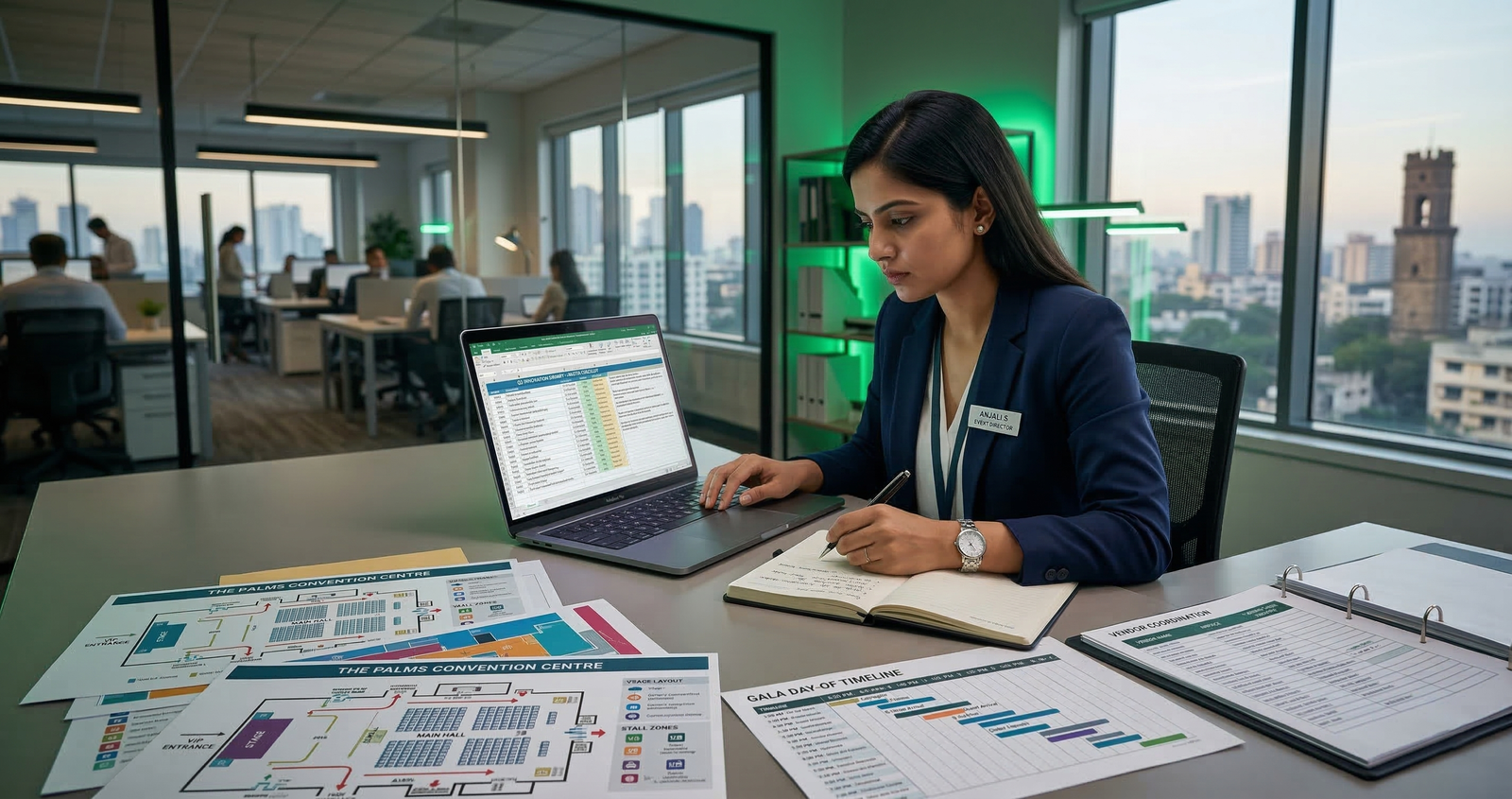
Every successful event starts with a checklist. Whether you are planning a product launch in Mumbai, an annual conference in Bangalore, or an exhibition in Delhi, missing even one critical task can derail the entire experience. This guide gives you a comprehensive, phase-by-phase checklist designed specifically for the Indian event landscape.
Plus, try our free Checklist Generator Tool to create a custom checklist for your specific event type.
6 Months Before the Event
- Define event objectives and KPIs
- Set the budget (use our Budget Calculator)
- Choose the event format (in-person, hybrid, virtual)
- Select 3 to 5 potential dates
- Research and shortlist venues
- Identify target audience and expected headcount
- Form the core planning team
- Create a shared project timeline
4 Months Before
- Confirm and book the venue (get everything in writing)
- Book key vendors: caterer, AV team, decorator
- Apply for required permits and licenses (police NOC, fire safety, FSSAI for food)
- Start speaker/performer outreach
- Design the event branding (logo, theme, colour palette)
- Set up registration system (Explara, Insider, or custom form)
- Begin marketing: save-the-date emails, social media teasers
3 Months Before
- Finalise the event agenda/run sheet
- Confirm all speakers/performers and collect their requirements
- Book accommodation and transport for VIPs/speakers
- Order printed materials (banners, standees, name badges, signage)
- Set up the event website or landing page
- Launch ticket sales or registration
- Begin social media campaign in earnest
2 Months Before
- Conduct venue site visit with all key vendors
- Finalise floor plan and seating layout
- Confirm menu with caterer (dietary requirements, tasting session)
- Brief the AV team on all technical requirements
- Arrange insurance coverage for the event
- Set up volunteer/staff roster
- Create detailed vendor payment schedule
1 Month Before
- Send final invitations and follow up on RSVPs
- Confirm headcount with venue and caterer
- Finalise all creative assets (presentations, videos, backdrops)
- Conduct tech rehearsal for AV, lighting, and presentations
- Prepare event-day kits (badges, welcome packs, agendas)
- Brief security team on access control and emergency protocols
- Confirm backup plans for weather/power/vendor issues
1 Week Before
- Final walkthrough with venue and all vendors
- Print final attendee list and seating charts
- Charge all equipment (walkie-talkies, laptops, cameras)
- Prepare a detailed minute-by-minute run sheet for event day
- Confirm transport arrangements for equipment and materials
- Set up WhatsApp groups for real-time coordination
- Pack emergency kit (first aid, sewing kit, tape, markers, extension cords)
Event Day
- Arrive 3 to 4 hours early for setup
- Check all AV equipment, lighting, and Wi-Fi
- Brief all staff and volunteers on their roles
- Set up registration desk and test badge printing
- Do a final walkthrough 30 minutes before doors open
- Assign one person to handle social media live coverage
- Keep the run sheet visible and track timing throughout
Post-Event (Within 1 Week)
- Send thank-you emails to attendees, speakers, and sponsors
- Collect feedback via online survey
- Process all vendor payments
- Compile event photos and videos
- Write a post-event report with KPIs vs actuals
- Share highlights on social media
- Debrief with the planning team - capture learnings for next time
India-Specific Considerations
- Permits: Police permission is mandatory for events above 200 people in most cities
- FSSAI: Required if serving food to more than 100 people
- Noise permits: Required for outdoor events or events after 10 PM
- GST: 18% GST applies on event management services
- Insurance: Not legally required but strongly recommended
- Power backup: Always arrange a generator, especially for outdoor venues
- Weather: June to September monsoon season needs indoor backup plans
This checklist covers 90% of what any Indian event needs. For a customised version based on your specific event type, use our Checklist Generator.
![Corporate Event Entertainment Ideas That Actually Work [2026 Guide]](/images/posts/article-76.png)
![How to Calculate Event ROI: The Formula Every Planner Needs [2026]](/images/posts/article-63.png)
![How to Write an Event Proposal That Wins Clients [2026 Guide + Template]](/images/posts/article-61.png)