Why Rigging Is the Most Critical Hidden Layer of an Event
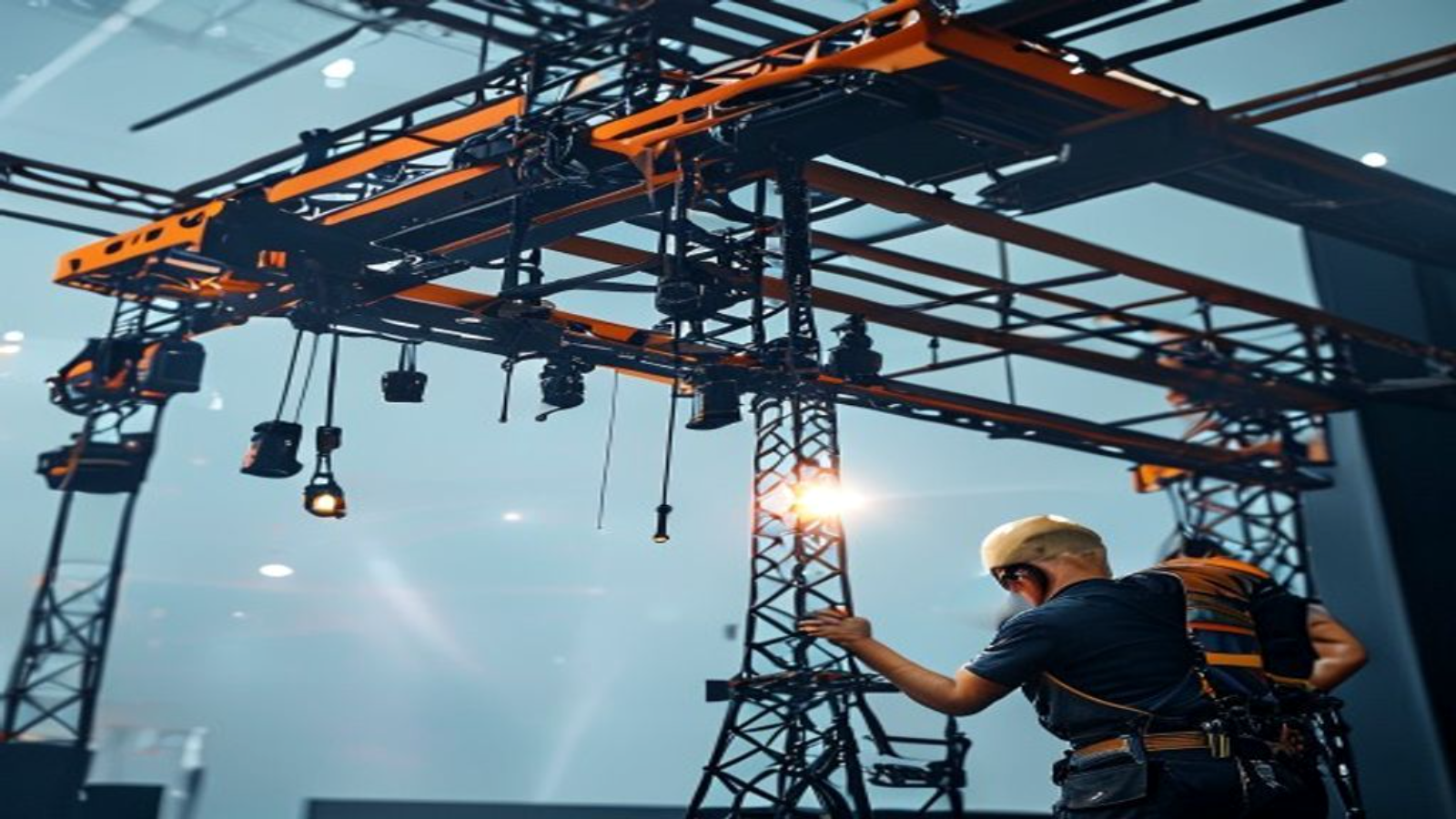
Every visible element on a modern event stage - the LED wall, the line array hangs, the moving lights, the truss-mounted decor - depends on rigging that the audience never sees and the client rarely thinks about until something goes wrong.
When something goes wrong in rigging, it doesn't go gently wrong. Truss failures, motor failures and rigging-point failures are the highest-consequence incidents in live events globally. The reason most Indian agencies haven't had a serious incident is good fortune as much as good practice.
In 2026, the conversation is changing. Larger venues, larger sponsors, and larger insurers are starting to demand rigging documentation. Agencies that don't have it are starting to lose work.
Truss Types and What They're Used For
Truss is rated by its construction (box, triangle, ladder, plate) and load capacity. The standard families used in Indian events:
Box Truss (4-chord)
The workhorse of festival and large event rigging. Four parallel chords with diagonal bracing.
- F32 / 290mm box - small to mid corporate events, indoor stages
- F34 / 30cm box - most common mid-size truss in India
- F44 / 40cm box - festival sub-stages, large corporate
- F52 / 52cm and larger - festival main stages, large roof systems
Load ratings vary widely. A 30cm box truss in 6m span typically rates 700-1,200 kg uniformly distributed load (UDL); shorter spans rate higher.
Triangle Truss (3-chord)
Lighter, used for decor, branding, accent lighting - not for heavy LED walls or audio hangs.
Ladder / Single Truss
Used for low-load applications: lighting backdrops, banner support, light decor.
Plated / Pre-Rig Truss
Pre-rigged trussing systems with built-in fixture mounts, used heavily in touring. Less common in Indian events but rising.
The right truss for any job is the one whose rated load capacity exceeds the actual load with adequate safety factor (industry-standard 7:1 or 10:1 depending on application). "Looks strong enough" is not engineering. The vendor should be able to provide a load calculation sheet for any major rig.
Chain Hoists / Motors - The Other Half of the Rig
Truss without motors is just metal. The hoists / chain motors are what get the truss in the air and hold it there.
Common Brands in India
- CM Lodestar / Columbus McKinnon - global standard
- Stagemaker - popular in Europe, increasing presence in India
- ProLyfter / Movecat - used by Indian rental companies
- VMB - entry-level reliable
- Verlinde / Yale - industrial heritage, used in larger fixed installations
Capacities Used
- 0.25T (250kg) - small lighting bars, decor, signage
- 0.5T (500kg) - typical for mid-size lighting truss
- 1T (1,000kg) - most common motor in Indian event rigging
- 2T (2,000kg) - large LED walls, line array hangs, festival stages
- 3.2T+ (3,200kg and above) - large festival roof systems
Typical Daily Rental
| Component | Daily Rental (India 2026) |
|---|---|
| 0.5T motor | Rs 800 - Rs 1,800 |
| 1T motor | Rs 1,500 - Rs 3,500 |
| 2T motor | Rs 3,500 - Rs 7,500 |
| 30cm box truss (per metre) | Rs 250 - Rs 650 |
| 40cm box truss (per metre) | Rs 450 - Rs 1,200 |
| Ground support tower | Rs 15,000 - Rs 50,000 per tower per day |
| Festival roof system (20m+ span) | Rs 4L - Rs 15L per day |
Add to these: rigger crew, transport, setup/dismantle days, and any structural calculations from a qualified engineer.
What Separates a Real Rigging Vendor From a Generic AV Vendor
Many Indian AV vendors offer "rigging" - but the gap between a generic AV company that owns some truss and a serious rigging vendor is large. Look for:
1. Rated and Certified Gear
- Truss with manufacturer load ratings stamped/documented
- Hoists with current inspection certificates
- Slings, shackles, steels rated and inspected
- Test certificates available on request
2. Qualified Riggers
International standards include ETCP (Entertainment Technician Certification Program - Rigging) and similar. India is starting to see riggers trained to ETCP and IRATA equivalents. A serious rigging vendor will have at least one ETCP-certified rigger or someone trained under reputable international programs.
3. Engineered Drawings for Major Rigs
For festival main stages, large roof systems, and rigs with heavy point loads, the vendor should produce or commission an engineered drawing - sealed by a qualified structural engineer - showing load distribution, anchor points, and safety factors.
4. Documentation and Method Statements
Risk assessment, method statement, lift plan - the standard documentation set that international touring expects. Indian event procurement in 2026 is starting to require this for major sponsor and government events.
5. Insurance
The vendor should hold public liability and equipment insurance covering rigging operations specifically. Many policies exclude rigging without explicit endorsement.
If a vendor cannot articulate the above, they are an AV vendor that does some rigging - not a rigging vendor.
Common Safety Mistakes That Are Still Routine in Indian Events
These are mistakes that happen on real Indian event sites in 2026. Every one of them is preventable.
- Overloading truss spans. A truss rated for 800kg UDL at 6m can fail catastrophically with concentrated loads at the centre, even if the gross weight is "below 800kg."
- Single-point hoist hangs. Heavy line array hangs need at least two hoist points. A single point with no secondary catch is a single point of failure.
- No secondary safeties. Every fixture above an audience zone needs a secondary safety wire/cable. This is non-negotiable in international standards and frequently skipped in Indian practice.
- Mismatched components. Mixing brand-X truss with brand-Y connectors. Mixing rated motors with un-rated steels. Each weakest link defines the system.
- No qualified ground rigger. A rigger up in the truss is only as safe as the ground rigger watching the load and signalling. Skipping this role is normalised at smaller events. It shouldn't be.
- Unprotected aisles below loaded truss. During load-in, if anything is being lifted overhead, the area below should be cleared. Crew walking under loads is one of the most common near-misses.
- Inspection skipped. Hoists need annual inspection. Chains need wear checks. Slings have working life limits. "It worked last time" is not inspection.
Choosing a Rigging Partner for Your Event
If you're an event agency hiring rigging, ask the vendor:
- Show me your current chain hoist inspection certificates
- What's the rated UDL of the truss type you're proposing for this rig?
- How many ETCP / certified riggers are on your team?
- Can you provide a method statement and load calculation for this job?
- What's your insurance coverage for rigging operations?
- Who is the senior rigger on this specific event?
If a vendor can't answer these in a single call, they are not the right partner for any event with significant overhead loads. There are vendors in India who can answer all of these. Use them, even if they cost 20-30% more.
Where the Indian Rigging Industry Is Headed
Three trends matter for 2026-28:
- Certification becomes standard. ETCP-equivalent certifications are growing, and major venues, sponsors, and insurers will increasingly require them.
- Pre-event documentation becomes mandatory. Method statements, lift plans, risk assessments - already standard at international touring - will become standard for Indian festivals and large corporate events.
- Premiumisation of qualified rigging. The gap between qualified rigging vendors and generic AV vendors will widen. Serious clients will pay 30-50% more for documented, certified rigging.
The vendors investing in certification, documentation, and rated gear in 2026 are the ones who will own this market in 2028.
Closing Note
Stage rigging is the layer of an event where the consequences of getting it wrong are highest, and the standards are tightening. The Indian event industry is at the inflection point where "we've never had an incident" is no longer a sufficient procurement answer.
If you are an agency: invest in 2-3 rigging partners who meet international documentation standards. Pay them their fair rate. Do not let procurement push you toward the cheapest rigging quote on a major event - the savings vanish next to one incident.
If you are a rigging vendor: this is the moment to invest in certification, documentation, and rated gear. The market is moving toward you. Be ready for it.
Plan stage layouts, truss positions, and rigging zones with our free Stage Layout Planner. Find vetted Indian rigging vendors through the Industry Directory.