Companies that execute structured pre-show marketing generate 2-3x more qualified leads than those who simply show up with a booth. The data is consistent across industries: CEIR (Center for Exhibition Industry Research) reports that 76% of trade show attendees arrive with a pre-made agenda, meaning if you're not on their list before the show, you're competing for leftover attention. The complete trade show marketing formula breaks into three phases - pre-show (50% of your marketing effort), at-show (30%), and post-show (20%) - each with specific tactics, timelines, and measurable outcomes.
Yet most exhibitors spend 80% of their budget on the booth and 20% on everything else. That ratio should be inverted. Your booth is the stage - marketing is what fills the audience.
The average exhibitor at a major trade show spends $20,000-$50,000 (Rs 16-40 lakh) on participation costs - booth rental, construction, travel, staffing. But companies that invest an additional 15-25% on structured marketing across all three phases consistently report 3-5x better ROI than those who rely on walk-in traffic alone.
This playbook covers every tactic across all three phases, with timelines, budget splits, and the KPIs that prove it's working.
The Pre-Show Phase: 12 Weeks to Show Day
Pre-show marketing is where trade show ROI is won or lost. 83% of exhibitors who exceed their lead targets start marketing at least 8 weeks before the event. Here's the week-by-week playbook.
12-Week Pre-Show Timeline
| Weeks Out | Priority Actions |
|---|---|
| 12-10 | Set goals, identify target attendees, build landing page, start content creation |
| 10-8 | Launch social media campaign, begin email sequence, issue press releases |
| 8-6 | Start personalized outreach, book meetings, launch paid ads, prepare at-show content |
| 6-4 | Intensify email cadence, confirm media briefings, finalize booth demos, social proof campaign |
| 4-2 | Final email pushes, appointment confirmations, share booth location, teaser content |
| 2-0 | Last-minute reminders, day-of social content scheduled, team briefed, collateral printed |
Pre-Show Tactic 1: Email Marketing Sequences
Email is still the highest-ROI channel for pre-show marketing, delivering $36 return per $1 spent in B2B contexts.
The 5-Email Pre-Show Sequence:
Email 1 - Announcement (8 weeks out): Subject: "We're exhibiting at [Show Name] - here's why you should visit" Content: What you're showcasing, booth number, one compelling reason to visit CTA: Save our booth to your agenda
Email 2 - Value offer (6 weeks out): Subject: "Exclusive at [Show Name]: [Free assessment / Demo / Preview]" Content: What attendees get by visiting your booth that they can't get elsewhere CTA: Book a meeting slot
Email 3 - Social proof (4 weeks out): Subject: "Join 50+ companies meeting us at [Show Name]" Content: Names of companies/people you're meeting, testimonials from past shows CTA: Book your slot before they fill up
Email 4 - Logistics + reminder (2 weeks out): Subject: "Find us at Booth [X] - here's your exclusive pass" Content: Booth location with map, show hours, parking/transport tips CTA: Confirm your meeting / Get your complimentary pass
Email 5 - Day-before urgency (1 day out): Subject: "See you tomorrow at [Show Name] - final meeting slots available" Content: Last chance messaging, what's happening at the booth, staff introductions CTA: Walk-in or book final slot
Email performance benchmarks for trade show campaigns:
| Metric | Industry Average | Good Performance | Top Performer |
|---|---|---|---|
| Open Rate | 22% | 28-32% | 35%+ |
| Click Rate | 3.5% | 5-7% | 8%+ |
| Meeting Booking Rate | 2% | 4-6% | 8%+ |
| Unsubscribe Rate | < 0.5% | < 0.3% | < 0.2% |
Pre-Show Tactic 2: Social Media Campaign
Start your social media campaign 8-10 weeks before the show. The goal is awareness and appointment generation.
Content calendar framework:
Weeks 10-8: Awareness
- Announce your participation with event hashtag
- Share what you're showcasing (product teasers, new launches)
- Behind-the-scenes booth prep content
Weeks 8-4: Engagement
- Introduce team members who'll be at the booth
- Share past show highlights and success stories
- Run polls: "What topic should we present at our booth?"
- Countdown posts with increasing urgency
Weeks 4-1: Conversion
- "Book a meeting" posts with clear CTAs
- Booth location reveals with floor plan
- Daily countdown with new reasons to visit
- User-generated content from past shows
Platform-specific strategies:
| Platform | Content Type | Posting Frequency | Best Performing Content |
|---|---|---|---|
| Articles, carousels, video | 3-4x/week | Behind-the-scenes, team intros, thought leadership | |
| Reels, Stories, carousels | 4-5x/week | Booth design reveals, countdown Stories, product teasers | |
| X (Twitter) | Text + image, threads | 5-7x/week | Industry insights, show hashtag engagement, live updates |
| YouTube | Long-form video | 1-2x pre-show | Booth design walkthrough, product previews, past show recap |
Pre-Show Tactic 3: Personalized Outreach
Mass marketing fills the top of the funnel. Personalized outreach fills the meeting schedule.
Target list building:
- Get the attendee/exhibitor list from the show organizer (most provide this 6-8 weeks before)
- Cross-reference with your CRM to identify existing contacts attending
- Use LinkedIn Sales Navigator to find decision-makers from target companies
- Check the show's online attendee directory and speaker list
Outreach approach:
- Send personalized LinkedIn messages to 50-100 priority targets
- Reference specific mutual interests or business overlap
- Offer exclusive value: private demo, industry briefing, or product preview
- Use a scheduling tool (Calendly, HubSpot Meetings) to make booking frictionless
Expected results: 15-25% response rate on personalized outreach (versus 2-3% on mass emails). Plan to reach out to 100 targets to book 15-25 meetings.
Pre-Show Tactic 4: PR and Media Outreach
Trade show press coverage amplifies your presence far beyond booth visitors.
6-8 weeks before:
- Identify trade media covering the event (check the show's media partner list)
- Prepare a press release for any new product, service, or announcement
- Pitch exclusive stories or interviews to key journalists
2-4 weeks before:
- Distribute press releases via industry channels
- Send media kits to confirmed press attendees
- Book press briefings and one-on-one journalist meetings
- Invite industry influencers for booth tours
Press release distribution channels:
- Show organizer's press portal (usually free for exhibitors)
- Industry-specific wire services
- Direct outreach to trade publication editors
- Company blog and social media channels
The At-Show Phase: Maximizing Every Minute
You've driven traffic. Now you need to capture, engage, and convert every visitor who walks into your booth.
At-Show Social Media: Real-Time Content
Live content from the show floor generates 4x more engagement than pre-show posts. Have a dedicated team member (or hire a freelance content creator) focused entirely on at-show social media.
Hour-by-hour content plan:
| Time | Content Type | Platform |
|---|---|---|
| 30 min before opening | "Doors open in 30 minutes" + booth setup photo | Instagram Stories, X |
| First hour | "Show is live" post + booth walkthrough video | LinkedIn, Instagram Reels |
| Mid-morning | Customer/visitor testimonial video | LinkedIn, Instagram |
| Lunch | Behind-the-scenes team content | Instagram Stories |
| Afternoon | Product demo highlight or key meeting recap | LinkedIn, X |
| End of day | Day recap with stats ("Met 85 companies today") | LinkedIn, Instagram |
| Evening | Networking event or dinner content | Instagram Stories |
Content capture essentials:
- Smartphone with gimbal for stable video
- Portable ring light for indoor lighting
- Wireless microphone for interviews
- Pre-designed social media templates (Canva or similar)
- Branded photo backdrop for visitor photos
At-Show Engagement Tactics
Product Demonstrations
Live demos are the #1 booth attraction. 74% of attendees say live demonstrations are "very influential" in their purchasing decisions.
Demo best practices:
- Run scheduled demos every 30-60 minutes (announced on booth signage and social media)
- Keep demos to 10-15 minutes maximum
- Include audience interaction (not just a monologue)
- Have a clear CTA at the end ("Book a detailed demo next week")
- Record demos for post-show content
Contests and Giveaways
Done right, contests drive traffic. Done wrong, they attract freebie seekers who have zero buying intent.
High-value contest formats:
- Business card drop with a relevant prize (industry tool, event ticket, tech gadget)
- Interactive challenge related to your product (quiz, simulation, AR experience)
- Social media contest ("Post a photo at our booth with #[hashtag] to enter")
- Spin-the-wheel with tiered prizes (every spin captures lead data)
Important: Make contest entry require a genuine lead form - name, company, role, contact info, and a qualifying question ("Are you currently evaluating solutions for [X]?"). This filters out non-leads while maintaining engagement.
Speaking Sessions and Thought Leadership
If the show offers speaking slots, fight for them. Speakers generate 3x more booth traffic than non-speaking exhibitors.
If formal speaking slots aren't available:
- Run mini-sessions in your booth (15-minute talks on industry topics)
- Host a panel discussion in your booth with invited industry experts
- Offer "Booth Theater" presentations on the hour
- Partner with the organizer for a sponsored workshop session
Product Launch Activations
Trade shows are ideal for product launches. 92% of attendees say they come to discover new products and solutions.
Launch checklist:
- Teaser campaign for 4 weeks before (social, email, PR)
- Countdown reveal at the booth (specific time announced in advance)
- Live-stream the launch for virtual audiences
- Offer show-exclusive pricing or early access
- Prepare press materials for immediate distribution
At-Show Lead Capture
Paper forms and business card bowls are dead. Digital lead capture is 3x more effective and 10x faster to process.
Digital lead capture options:
| Method | Speed | Data Quality | Cost |
|---|---|---|---|
| Badge scanning (show-provided) | Fast | Good (basic info) | Included or Rs 5,000-15,000 |
| Custom app (iCapture, Attendify) | Fast | Excellent (custom fields) | Rs 20,000-50,000/show |
| QR code forms | Medium | Good (custom fields) | Free-Rs 5,000 |
| Tablet forms (Typeform, Google Forms) | Slow | Good | Free-Rs 2,000 |
| NFC tap to capture | Very Fast | Basic | Rs 10,000-30,000 |
Lead qualification at the booth: Use a simple BANT framework modified for trade shows:
- Budget: Is there budget allocated for this type of solution?
- Authority: Is this person a decision-maker or influencer?
- Need: Do they have a specific problem your product solves?
- Timeline: Are they evaluating solutions in the next 3-6 months?
Train booth staff to qualify leads in 60 seconds using 3-4 targeted questions. Tag leads as Hot (request follow-up within 24 hours), Warm (follow up within 1 week), or Cold (add to nurture list).
Influencer and Media Engagement at the Show
Influencer activations:
- Invite 3-5 industry influencers for a private booth tour
- Provide them with exclusive content or early product access
- Create a branded experience they'll want to share (photo opportunity, AR demo, unique giveaway)
- Don't script their content - give them the experience and let them tell the story
Media engagement:
- Staff a press desk or have a designated media contact
- Provide USB drives or a QR code linking to your digital press kit
- Offer exclusive interviews with your CEO or product lead
- Send real-time updates to media contacts who couldn't attend
The Post-Show Phase: Where Revenue Happens
Here's the uncomfortable truth: 79% of trade show leads are never followed up. The companies that win are the ones who have a post-show system ready to execute the moment the show ends.
The 48-Hour Follow-Up Window
Research from InsideSales.com shows that leads contacted within 48 hours are 7x more likely to convert than those contacted after a week. Yet the average exhibitor takes 2-3 weeks to follow up.
Day 1 after the show (within 24 hours):
- Send a personalized thank-you email to all Hot leads
- Connect on LinkedIn with a custom note referencing the conversation
- Upload all lead data to your CRM with tags and notes
- Brief the sales team on Hot leads with context from booth conversations
Day 2-3 after the show:
- Send emails to Warm leads with relevant content
- Schedule follow-up calls with Hot leads
- Post show recap content on social media
- Send a general thank-you to all scanned/captured leads
Week 1-2:
- Complete all Hot lead follow-up calls
- Send case studies or product information to Warm leads
- Publish blog post recap of the show
- Share event photos and tag visitors/partners
Post-Show Lead Nurture Sequence
Not every lead is ready to buy. A 6-8 week nurture sequence keeps you top-of-mind.
Email 1 (Day 1-2): Thank you + value "Great meeting you at [Show]. Here's the [resource/demo/case study] we discussed."
Email 2 (Day 7): Social proof "See how [Company X] solved [problem] using our solution." Include a relevant case study.
Email 3 (Day 14): Educational content Share an industry report, whitepaper, or guide related to the prospect's challenges.
Email 4 (Day 21): Soft CTA "We're offering a [free assessment/consultation/trial] for companies we met at [Show]. Interested?"
Email 5 (Day 30): Direct CTA "We helped [X companies] from [Show] get started. Ready to explore how we can help you?"
Email 6 (Day 45): Last touch "Still thinking about [solution]? Here's what's new since we met." Final CTA.
Content Repurposing from Trade Shows
One trade show should generate 4-8 weeks of marketing content.
Content to capture and repurpose:
| Content Type | Captured At Show | Repurposed Into |
|---|---|---|
| Booth demo video | Live recording | Product demo for website, social clips |
| Customer testimonials | Quick video interviews | Case study quotes, social proof ads |
| Product photos | Professional photographer | Website gallery, social media, PR |
| Speaker presentations | Slide deck + recording | Blog posts, LinkedIn articles, webinar |
| Industry conversations | Notes and insights | Thought leadership content, trend reports |
| Event photos | Team and visitor shots | Social media, internal comms, next year's marketing |
| Competitor intelligence | Booth walks, conversations | Internal strategy docs, sales battle cards |
Marketing Budget Allocation for Trade Shows
The biggest mistake exhibitors make is spending 80% on the booth and 20% on marketing. Here's the recommended split.
Budget Allocation Framework
| Category | Percentage of Total Budget | Includes |
|---|---|---|
| Booth Design and Construction | 30-35% | Design, fabrication, graphics, furniture, AV |
| Pre-Show Marketing | 20-25% | Email campaigns, social ads, PR, content creation |
| At-Show Marketing | 15-20% | Live content creation, influencer activations, demos, giveaways |
| Post-Show Follow-Up | 10-15% | Lead nurture, CRM setup, content repurposing, follow-up campaigns |
| Travel and Logistics | 10-15% | Team travel, accommodation, shipping, drayage |
| Contingency | 5% | Unexpected costs, last-minute opportunities |
Budget Example: Mid-Size Trade Show Participation
For a company spending Rs 15 lakh total on a major trade show:
| Category | Budget | Key Activities |
|---|---|---|
| Booth (30%) | Rs 4.5L | Modular booth, graphics, lighting, AV setup |
| Pre-Show (25%) | Rs 3.75L | Email platform, LinkedIn ads, PR, content, landing page |
| At-Show (20%) | Rs 3L | Videographer, giveaways, live social, demo setup |
| Post-Show (15%) | Rs 2.25L | CRM setup, nurture emails, content, follow-up tools |
| Travel (10%) | Rs 1.5L | Team of 4, accommodation, local transport |
Social Media Strategy by Platform
LinkedIn (Primary B2B Channel)
LinkedIn is the #1 platform for trade show marketing. 80% of B2B leads from social media come through LinkedIn.
Pre-show (4-8 weeks):
- Company page posts: 3-4x per week
- Personal profiles of team members: 2-3x per week
- LinkedIn articles: 1-2 long-form pieces about what you're showcasing
- Sponsored content targeting show attendees by job title and industry
At-show:
- Live posts from the booth every 2-3 hours
- Short video clips of demos, conversations, and show floor
- Tag visitors, partners, and the event organizer
- Share quick insights from sessions you attend
Post-show:
- Day 1: Show recap with photos and key stats
- Day 3: Key takeaways article
- Week 2: Insights from conversations (anonymized if needed)
- Ongoing: Repurpose booth content for 4-6 weeks
Best for: Visual products, booth design showcase, behind-the-scenes content, younger audiences
- Use Stories for real-time show updates (10-15 Stories per show day)
- Post Reels of booth walkthrough, product demos, and show floor tours
- Create a show-specific highlight on your profile
- Use the event hashtag in every post
- Tag the event and location for discoverability
X (Twitter)
Best for: Real-time conversation, press engagement, industry commentary
- Tweet 8-12 times per show day
- Engage with the event hashtag and comment on trending show topics
- Live-tweet key sessions and announcements
- Share quick video clips (under 60 seconds)
- Engage directly with journalists, speakers, and influencers
KPI Tracking and Measurement Framework
Pre-Show KPIs
| KPI | How to Measure | Target |
|---|---|---|
| Meetings booked pre-show | CRM/calendar tracking | 20-30 per show |
| Email campaign engagement | Open rate, click rate | 28%+ open, 5%+ click |
| Social media reach | Platform analytics | 2-5x your follower count |
| Landing page conversions | Google Analytics | 10-15% conversion rate |
| Press confirmations | PR tracking | 3-5 media meetings |
At-Show KPIs
| KPI | How to Measure | Target |
|---|---|---|
| Total leads captured | Lead capture system | Industry benchmark x 2 |
| Qualified leads (Hot + Warm) | BANT qualification | 30-40% of total leads |
| Demos delivered | Demo counter/log | 15-25 per day |
| Meetings completed | Calendar check-ins | 80%+ completion rate |
| Social media engagement | Real-time analytics | 3x normal daily engagement |
| Media coverage | Press mentions tracker | 2-5 articles/mentions |
Post-Show KPIs
| KPI | How to Measure | Target |
|---|---|---|
| Lead follow-up rate (48 hrs) | CRM tracking | 100% Hot, 80% Warm |
| Meeting-to-opportunity rate | Sales pipeline | 15-25% of qualified leads |
| Content pieces produced | Content calendar | 8-12 pieces |
| Social media post-show engagement | Platform analytics | 50% of at-show levels for 2 weeks |
| Revenue attributed to show | CRM + closed deals | 5-10x total investment (over 12 months) |
| Cost per qualified lead | Total spend / qualified leads | Under Rs 2,000-5,000 per lead |
The 12-Month ROI Calculation
Trade show ROI isn't measured on show day. It takes 6-12 months for deals to close.
Formula: Trade Show ROI = (Revenue from Show Leads - Total Show Investment) / Total Show Investment x 100
Example:
- Total investment: Rs 15 lakh
- Qualified leads: 120
- Conversion rate: 15% (18 deals)
- Average deal value: Rs 3 lakh
- Revenue: Rs 54 lakh
- ROI: 260%
Track attribution in your CRM by tagging every lead with the show name and date. Review pipeline and revenue at 3, 6, and 12 months post-show.
India-Specific Trade Show Marketing Strategies
WhatsApp Marketing
WhatsApp is the dominant business communication channel in India. Use it strategically for trade show marketing:
Pre-show: Send booth location and meeting confirmation via WhatsApp Business. Create broadcast lists for different attendee segments. Share short teaser videos (under 30 seconds) of what you're showcasing.
At-show: Share real-time updates with your WhatsApp contact list. Use WhatsApp Status for booth highlights. Send instant meeting confirmations via WhatsApp.
Post-show: Follow up with personalized WhatsApp messages within 24 hours. Share product brochures and catalogs as PDF via WhatsApp. Continue the conversation in existing WhatsApp threads.
Important: Always use WhatsApp Business (not personal) for marketing. Comply with India's data protection requirements and get explicit consent before adding contacts to broadcast lists.
Regional Trade Show PR
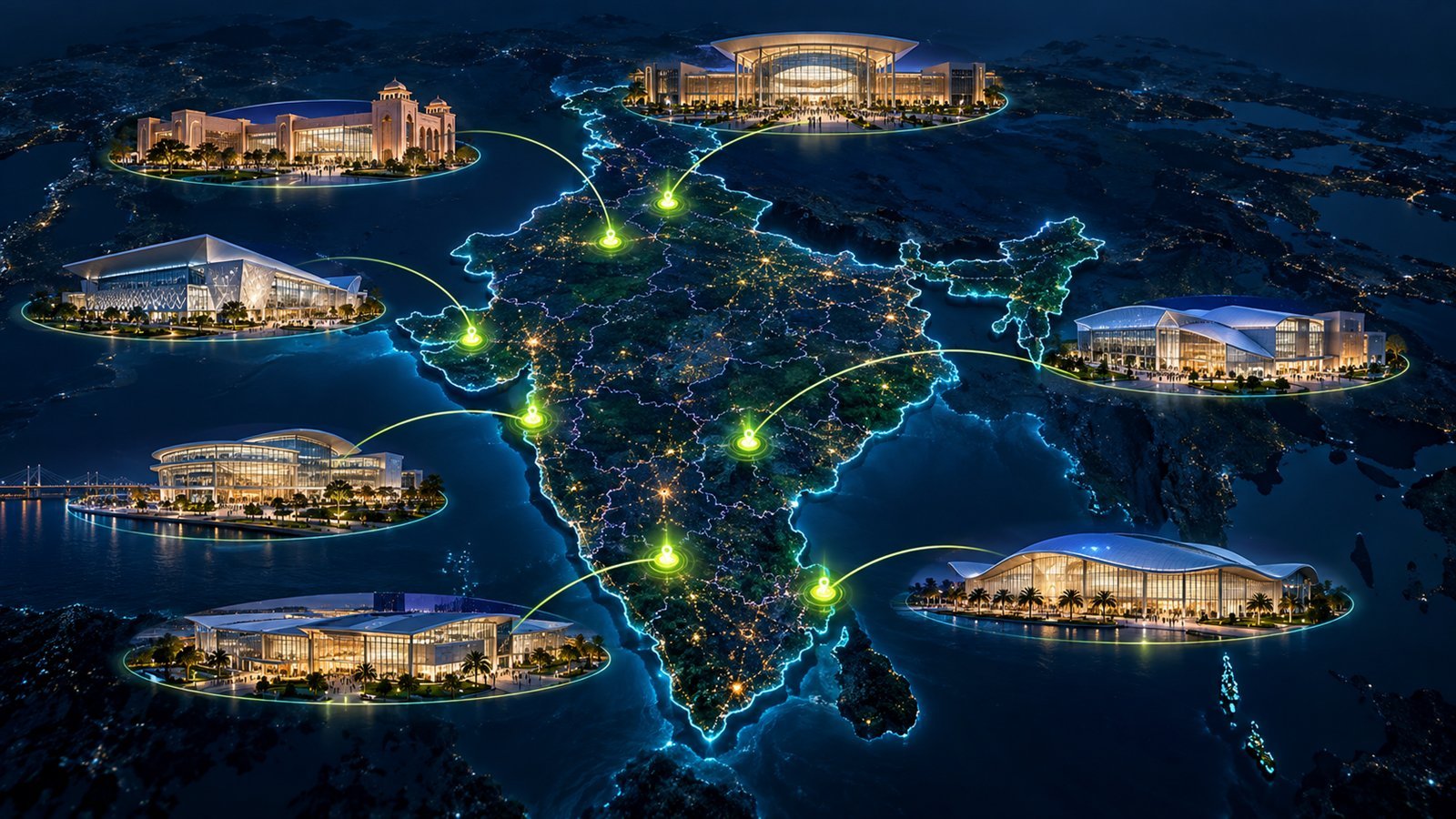
India's trade show landscape is spread across major cities - Mumbai, Delhi, Bangalore, Chennai, Hyderabad, Ahmedabad. Each market has its own trade media ecosystem.
Regional PR approach:
- Identify regional trade publications and industry associations for each show city
- Issue press releases in English and the regional language where relevant
- Build relationships with regional journalists who cover specific industry verticals
- Leverage local industry association newsletters for pre-show announcements
- Partner with local chambers of commerce (CII, FICCI, ASSOCHAM) for show-specific promotions
Industry Association Promotions
Indian trade shows are heavily influenced by industry associations. Leveraging these relationships amplifies your marketing:
- Get listed in association member directories as an exhibitor
- Sponsor association networking events co-located with the trade show
- Present at association seminars or panel discussions
- Offer association member-exclusive booth experiences or pricing
- Co-brand marketing materials with relevant associations
India Trade Show Marketing Budget Benchmarks
| Show Category | Typical Total Budget | Pre-Show Marketing | At-Show | Post-Show |
|---|---|---|---|---|
| Local/Regional | Rs 3-8 lakh | Rs 50K-1.5L | Rs 30K-1L | Rs 20K-50K |
| National Major | Rs 10-25 lakh | Rs 2-5L | Rs 1.5-4L | Rs 1-2.5L |
| International (India-hosted) | Rs 25-60 lakh | Rs 5-12L | Rs 3-8L | Rs 2-5L |
| International (overseas) | Rs 40-100 lakh | Rs 8-20L | Rs 5-15L | Rs 3-8L |
Content Calendar Template for Trade Show Marketing
Here's a ready-to-use 12-week content calendar. Adapt it to your specific show dates.
Weeks 12-8: Foundation
| Week | X | PR | |||
|---|---|---|---|---|---|
| 12 | - | Announcement post | - | - | Internal brief |
| 11 | - | What we're showcasing | Behind-the-scenes | - | Press release draft |
| 10 | Email 1: Announcement | Team intro post | Booth design teaser | Announcement | Media list building |
| 9 | - | Industry insight post | Product teaser Reel | Event hashtag join | Journalist outreach |
| 8 | Email 2: Value offer | Case study post | Customer spotlight | Engagement posts | Press release distribution |
Weeks 7-4: Acceleration
| Week | X | PR | |||
|---|---|---|---|---|---|
| 7 | - | Meeting booking CTA | Countdown start | Industry discussion | Media meeting booking |
| 6 | Email 3: Social proof | Video: what to expect | Stories: prep updates | Show topic thread | Press kit distribution |
| 5 | - | Poll: what should we demo | Product reveal Reel | Engagement sprint | Journalist confirmations |
| 4 | Email 4: Logistics | Booth location reveal | Floor plan with booth marked | Daily show tips | Final media outreach |
Weeks 3-0: Sprint
| Week | X | PR | |||
|---|---|---|---|---|---|
| 3 | Reminder email | Countdown posts | Daily Stories | Daily tips + hashtag | Press briefing schedule |
| 2 | Meeting confirmations | Team at the show intro | Packing/prep content | Attendee engagement | Media schedule confirmed |
| 1 | Email 5: See you tomorrow | Final CTA post | Arrival content | Real-time excitement | Press desk ready |
| Show | Day recap emails | Live posts 3-4x/day | 10-15 Stories/day | 8-12 tweets/day | Media briefings |
Tools and Resources
Use our Event Budget Calculator to plan your trade show marketing budget with proper pre/at/post allocation.
Building a proposal for trade show participation? Our Event Proposal Generator helps structure your business case with projected ROI.
For booth design strategies that complement your marketing, see our guide on Exhibition Booth Design Trends 2026 and Exhibition Stall Lead Generation Strategies.
To understand the full cost picture, check our Exhibition Stall Construction Cost Guide.
Frequently Asked Questions
1. How far in advance should trade show marketing begin?
Start 12 weeks (3 months) before the show. The first 4 weeks focus on planning, landing page creation, and content development. Active marketing campaigns (email, social, PR, outreach) should begin 8 weeks before the event. Companies that start marketing only 2-3 weeks before the show consistently underperform on lead generation by 40-60%.
2. What percentage of the trade show budget should go to marketing?
Allocate 45-60% of your total trade show budget to marketing activities across all three phases. The recommended split is: 20-25% pre-show marketing, 15-20% at-show marketing and engagement, and 10-15% post-show follow-up. Most companies over-invest in booth construction (spending 60-80% there) and under-invest in the marketing that drives traffic to the booth.
3. How many leads should I expect from a trade show?
Lead volume depends on show size, booth size, and marketing effort. A 9-sqm booth at a major trade show typically generates 80-150 leads over 3 days without structured marketing, and 200-400+ leads with a full marketing program. Qualified leads (Hot + Warm) should represent 30-40% of total captures. See our lead generation strategies guide for detailed benchmarks.
4. What is the best social media platform for trade show marketing?
LinkedIn is the primary platform for B2B trade show marketing, generating 80% of B2B social media leads. Use LinkedIn for pre-show appointment booking, thought leadership, and post-show nurturing. Instagram is best for visual engagement and behind-the-scenes content. X (Twitter) excels at real-time show coverage and journalist engagement. Use all three, but prioritize LinkedIn for lead generation.
5. How quickly should I follow up after a trade show?
Within 48 hours for Hot leads, within 1 week for Warm leads. Leads contacted within the first 48 hours are 7x more likely to convert than those contacted after 2 weeks. Have your follow-up emails pre-written and CRM tags pre-configured so you can execute immediately. The best companies send their first follow-up email the evening of each show day.
6. How do I measure trade show marketing ROI?
Track three levels: immediate metrics (leads captured, meetings held, social engagement), short-term metrics (follow-up meetings booked, pipeline created within 30 days), and long-term metrics (deals closed and revenue attributed within 12 months). The formula is: ROI = (Revenue from Show Leads - Total Investment) / Total Investment x 100. Tag all leads in your CRM with the show name for accurate attribution.
7. Should I use paid advertising to promote trade show participation?
Yes, but targeted. LinkedIn Sponsored Content targeting attendees by job title, industry, and company size delivers the best ROI for B2B trade shows. Budget Rs 30,000-75,000 for a 4-week LinkedIn campaign. Retarget landing page visitors with display ads. Avoid broad Facebook/Instagram ads unless your product has a strong visual appeal. Paid social should supplement organic efforts, not replace them.
8. What content should I create specifically for trade show marketing?
Pre-show: landing page, email sequence, social media posts, press release, one-page product sheets. At-show: live social content, demo videos, visitor testimonials, photo/video coverage. Post-show: show recap blog, video highlights, case studies from conversations, repurposed demo content, insights article. One trade show should generate 15-25 content pieces across all phases.
9. How do I get media coverage at trade shows?
Start 6-8 weeks before by identifying trade journalists covering the event. Send personalized pitches (not mass press releases) with a clear story angle - product launch, industry data, expert viewpoint. Offer exclusive interviews or early product access. At the show, have a press-ready area in your booth with media kits (digital, not paper). Follow up with journalists within 24 hours with high-resolution images and quotes.
10. What are the most common trade show marketing mistakes?
The top five mistakes are: (1) spending 80%+ on the booth and neglecting marketing, (2) starting marketing only 2-3 weeks before the show, (3) not having a structured follow-up system ready before the show starts, (4) treating all leads equally instead of qualifying and prioritizing, and (5) failing to repurpose show content for post-show marketing. Companies that avoid these five mistakes consistently achieve 2-3x better ROI than the average exhibitor.